
Uptown Scottsbluff proves a former mall does not have to go back in time to become useful again.
Uptown Scottsbluff illustrates how we think about HomeTown retail in practice. The story is not about chasing a trophy market or pretending the old enclosed-mall model is returning. It is about taking overlooked retail infrastructure and making it useful again.
The asset needed a more practical future: better retailers, a stronger role in the trade area, and a reason for the community to use it again. At RockStep Capital, that is the work we care about. Find real estate the market still needs, understand what it can become, and build a path to return around usefulness.
That starts with looking past the old label.
Why Former Malls Need Retail Repositioning Instead Of Nostalgia
Former enclosed malls carry baggage.
Investors hear “mall” and often assume the conversation is over. They picture department-store decline, empty corridors, excessive common area, outdated tenant mixes, and a format that no longer fits how people shop.
Some of those concerns are fair. They just should not be the whole analysis.
A former mall should not be judged solely by what it once was. The better question is what the real estate can become for the market now.
At Uptown Scottsbluff, the opportunity was to move the asset toward a stronger retail node with tenants the community actually uses. That is a different underwriting question and a much more useful one.
Why Old Retail Formats Need New Jobs
A struggling retail asset can be like an old toolbox. Some pieces may no longer be useful for the job at hand, but that does not mean the whole thing belongs in the trash.
The site, parking, customer memory, access, visibility, and regional draw may still matter. The challenge is determining which parts of the asset still hold value and which need to change.
For a former mall, that may mean asking:
-
What parts of the property still serve the market?
-
What parts of the old format are holding the asset back?
-
What tenant mix would make the property useful again?
That is where retail repositioning begins. Once we understand what still works, the next question is whether the property can serve as useful retail infrastructure for the market.
What Useful Retail Infrastructure Means In HomeTown Retail
We use the phrase useful retail infrastructure because it describes what a strong HomeTown retail asset should be.
A center should help the community live its life. It should give residents access to retailers, services, restaurants, and categories they would otherwise have to drive farther to reach. It should support jobs and sales tax while helping the town feel like it still has momentum.
That may sound simple.
In smaller markets, simple matters.
Uptown Scottsbluff didn't have to transform into a luxury property; instead, it needed to improve as a retail option for the local trade area.
How Practical Retailers Validate HomeTown Retail Demand
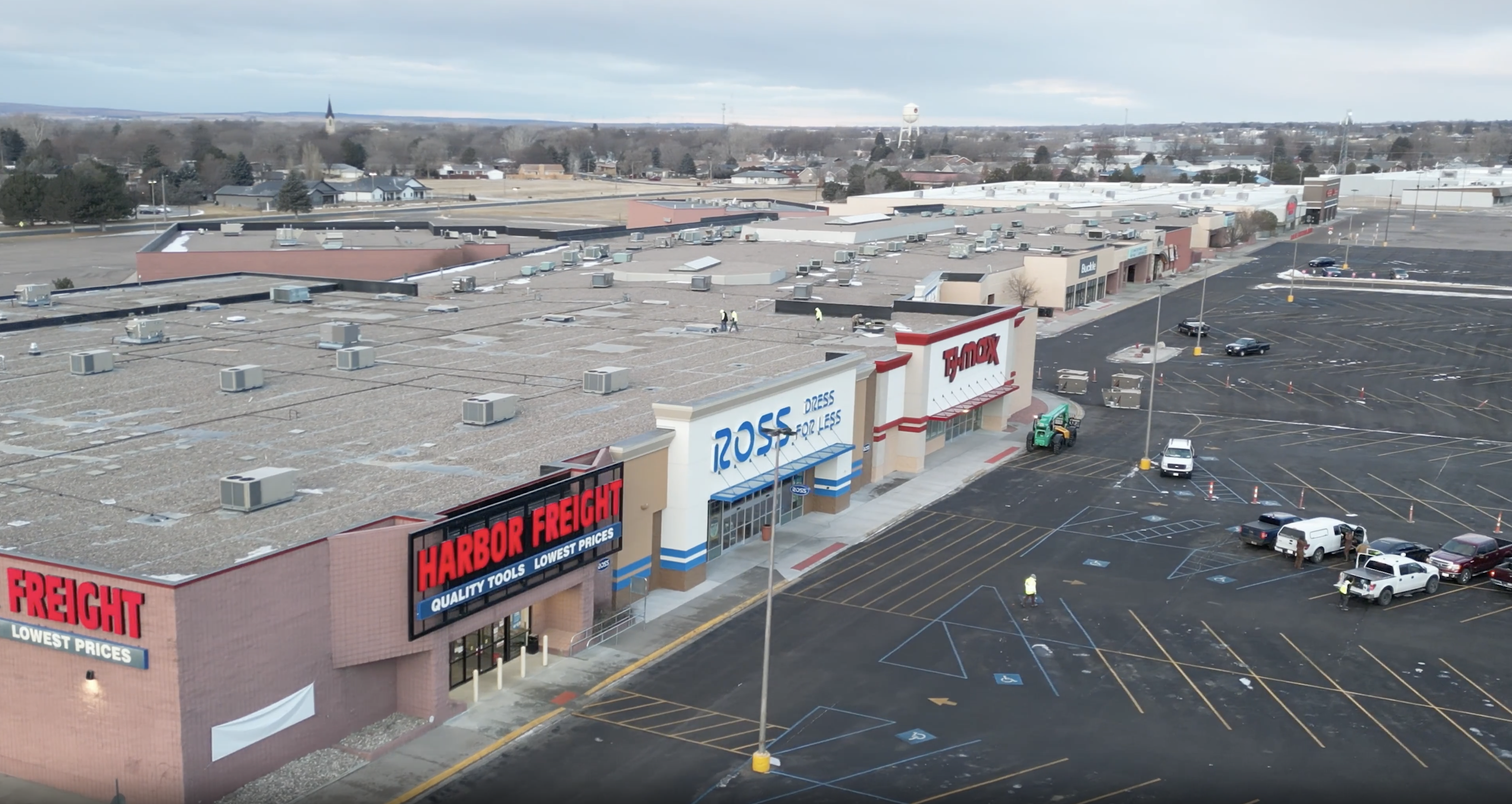
Retailers such as TJ Maxx, Five Below, Harbor Freight, Hobby Lobby, and Ross help tell that story because they are practical retailers with real customer demand. They drive traffic, validate the market, and make the property more useful.
Lineups like this matter because they show the asset is matched with retailers that customers actually use. It also points to a broader idea: the market label matters less than the demand the property can serve.
For HomeTown retail, that is the point.
Why The Scottsbluff Market Matters More Than The Market Label
Many investors would rather buy in a familiar market and compete for the same deal everyone else wants. The RockStep Capital team is willing to do the harder work of understanding a HomeTown market.
Scottsbluff is not a place every family office has visited, and that is fine. The relevant question is whether the market has enough trade-area demand to support the retail.
If the property is one of the main retail nodes for a wider area, the municipal population figure does not tell the full story. If the center gives retailers access to the customers they want, the market label becomes less important.
HomeTown Retail Market Questions Investors Should Ask
For new investors, this is where the analysis needs to move beyond first impressions. The questions become more practical:
-
Does the property serve a wider trade area than the city population suggests?
-
Do retailers want access to the customers in that trade area?
-
Is the asset already known as a retail destination?
-
Can the property support categories the community actually needs?
-
Does the basis leave room for repositioning and execution?
HomeTown retail focuses on demand, utility, basis, and execution, rather than the investor’s personal familiarity with the town.
Uptown Scottsbluff makes that visible, especially because the strategy was never about denying that retail had changed.
Why Retail Repositioning Beats Denial In Mall Redevelopment
The worst way to handle a struggling retail asset is to deny that the world changed.
Department stores lost power. Many enclosed malls have too much interior space for today’s retail demand. Consumers, retailers, construction costs, and the debt market all changed.
The answer is to identify what remains valuable and rebuild around that.
At a property like Uptown Scottsbluff, the value may come from the site, customer memory, location, parking, regional draw, and the ability to deliver boxes retailers can use.
This doesn't mean the old mall model was perfect; instead, it shows that traditional real estate can still hold value if the sponsor stays disciplined and adapts it to today's market.
That is the skill set.
How Retail Repositioning Creates A New Path Forward
Retail repositioning works best when the sponsor stops trying to revive the past and starts solving for the present. That may mean breaking up large spaces, adding exterior-facing retail, improving access, rethinking the tenant mix, or bringing in growth- and value-oriented retailers that fit the market.
In practice, repositioning may involve:
- Breaking up large spaces into boxes retailers can actually use.
- Improving access and visibility so the property works better for customers.
- Rebuilding the tenant mix around current demand instead of old assumptions.
The goal is straightforward: make the property useful for how people shop now.
And the clearest sign that this is working is retailer demand.
Why Retailer Demand Is The Proof In HomeTown Retail
The best argument for a repositioning is retailer demand.
If strong retailers want to be in the market and can operate there, that tells us something important. It suggests the trade area has customers, the asset can still be relevant, and the community may be underserved in categories that matter.
Retailers are not perfect. They make mistakes too. But they are practical. They do not open stores to help a landlord tell a better story.
They open stores because they believe the unit economics can work.
That is why a tenant lineup can be such an important signal. At Uptown Scottsbluff, the retailer lineup supports the investment thesis.
What Retailer Demand Signals To Investors
Retailer demand can help investors understand whether a repositioning has a real market behind it. It may signal:
- Trade-area strength beyond the city population number.
- Category gaps that existing retail does not fully serve.
- Tenant confidence in the market’s customer base.
- A stronger role for the property as a regional retail node.
- A more credible return path if the basis and execution plan make sense.
Retailer interest does not eliminate risk, but it gives investors a clearer signal than a pretty rendering or a hopeful redevelopment plan.
Of course, demand still has to meet discipline. That is where basis comes in.
Why Basis Still Matters In Retail Repositioning
A good repositioning can be ruined by a bad basis.
If we pay too much, spend too much, or underwrite rents too aggressively, the deal can fail even if the market is real. That is why discipline matters.
The appealing HomeTown retail model isn’t about purchasing a struggling center and waiting for it to recover. Instead, it involves acquiring or controlling the real estate at a basis that allows the sponsor to improve the property, attract retailers, use debt wisely, and develop a return strategy that doesn’t rely solely on a perfect exit.
The basis is the foundation of the entire plan. If the foundation is wrong, the rest of the story has to work too hard.
Why Uptown Scottsbluff Fits The HomeTown Retail Thesis
Uptown Scottsbluff is useful as a case study because it brings together several parts of the thesis:
- A HomeTown market that may be overlooked by many investors.
- Existing retail infrastructure with a role in the trade area.
- Repositioning away from a weaker old format toward a more useful retail mix.
- Growth and value-oriented retailers that can serve practical customer demand.
- A property that can matter to the community beyond the rent roll.
That is the kind of combination we want to identify. For new investors, it also shows why broad labels can hinder better analysis.

Why This Matters For Real Estate Investors
For new investors, Uptown Scottsbluff matters because it shows why retail real estate cannot be judged only by broad labels.
A former mall is not automatically a failed asset. A smaller market is not automatically weak. A property that appears overlooked from a distance may still have customer demand, retailer interest, useful infrastructure, and local relevance.
Why Operator Judgment Matters In Retail Redevelopment
The work is distinguishing between what is obsolete and what is underused. Some assets have lost their role, and we should be honest about that. Others still sit in the right location, serve the right trade area, and need a sponsor willing to reshape the real estate for today’s retailers.
That is where operator judgment matters, and that is the broader lesson Uptown Scottsbluff teaches us.
What Uptown Scottsbluff Teaches About HomeTown Retail
Uptown Scottsbluff teaches a simple lesson: overlooked does not always mean obsolete.
Some retail assets have truly lost their role. Others are misread because investors cannot envision a different format, tenant mix, or purpose in the community.
The value lies in seeing what the asset can become when the market still needs useful retail. That is HomeTown retail: practical, local, and often overlooked, yet powerful when demand, basis, retailers, and execution align.
Topics: