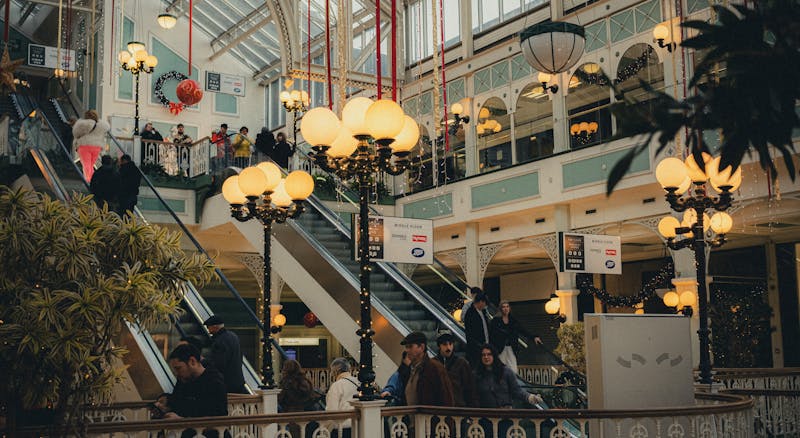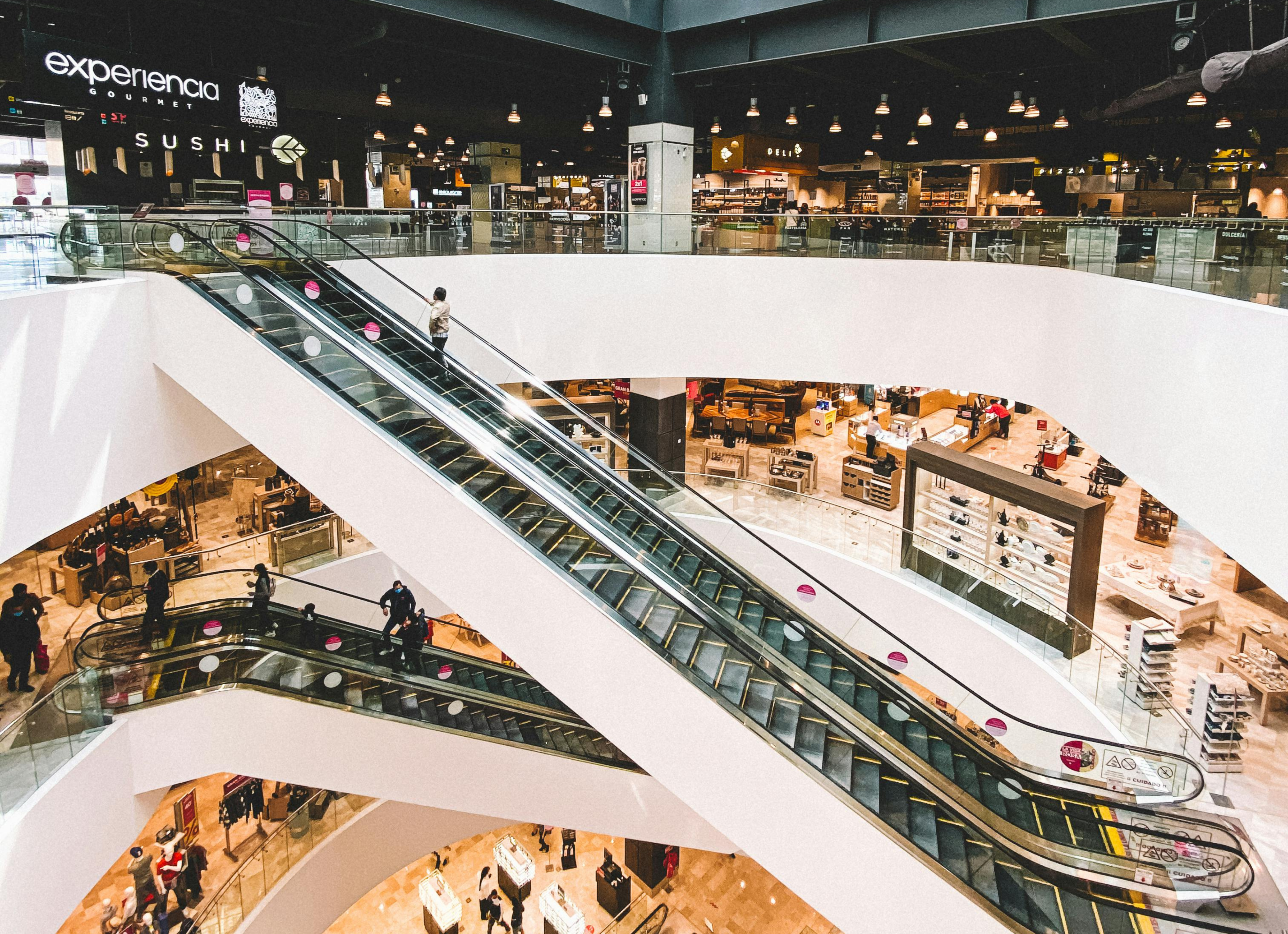


Enclosed mall shoppers are motivated by far more than traditional shopping. They visit malls for dining, entertainment, services, events, and social experiences, making successful malls important community gathering places. Investors who understand why people visit and adapt tenant mixes to those changing behaviors are better positioned to create long-term value and resilient retail properties.
Most people assume malls are fading because they picture the wrong customer, but once you understand who’s actually showing up, the narrative shifts.
When we tell people we invest in enclosed malls, the first question is almost always the same: “Do people still go to malls?”
The answer is yes.
About 55 million Americans visit a mall each week, according to ICSC data. Those who visit at least once a week spend an average of $150 per visit. That adds up to about $4.2 billion a day flowing through U.S. shopping centers.
But raw traffic counts don’t tell you much. They’re like counting cars on a highway without knowing where anyone is going. The more important question is who these people are, why they’re coming, and what they do when they arrive. Because once you understand that, a different picture of the modern mall begins to emerge.
This isn’t a story about declining retail but about a customer base that has shifted, adapted, and often become more valuable. The modern mall customer differs from the stereotype most investors envision, and that gap presents an opportunity.
Do People Still Go to Malls in 2026? What the Data Shows
If you still imagine the typical mall shopper as a teenager killing time at Hot Topic, you're about twenty years behind.
Placer.ai's Mall Index data through late 2025 indicates that the demographic makeup of mall visitors is increasingly shifting toward suburban families and older adults. Visitor profiles at enclosed malls have moved away from young urban residents and toward more affluent, family-oriented households with greater spending power.
At a high level, today’s mall customer base breaks down into a few key groups:
- Families with children who drive weekend and routine visits
- Gen Z shoppers using malls as both retail and social space
- Older adults who visit frequently for dining, walking, and social activity
- Value-oriented shoppers focused on in-person product experience
This matters to investors because foot traffic quality affects tenant stability, which in turn impacts the rent roll. Just as strong foot traffic boosts tenant sales, steady demand underpins any business.

Why Families Drive Mall Traffic in Tertiary Markets
Families often shape visit patterns in tertiary markets, which have fewer entertainment options and retail clusters, concentrating activity in one location. The mall becomes a habitual Saturday outing with kids, more routine than special.
It's climate-controlled, safe, and easy to navigate, with food, play, and retail options keeping everyone engaged. For families in places like Bowling Green, Kentucky, or Tyler, Texas, malls are often the primary choice. Families spend about 60 minutes per visit in malls, according to Placer.ai, a considerable amount of time in a space designed for browsing and spending.
Why Gen Z Still Shops at Malls in 2026
Teenagers and young adults are believed to have vanished from malls, but data says otherwise.
L.E.K. Consulting's 2024 survey found that 64% of Gen Z prefer in-store shopping, and PwC shows 61% of Gen Z enjoy discovering products in person. Despite growing up with Amazon Prime, they shop in person more than Millennials.
Malls function as a "third place" for teenagers, somewhere to go that isn't home or school, much like a modern-day town square. In smaller markets without many alternatives, this role becomes even more pronounced.
The Most Consistent Mall Shoppers: Older Adults and Value-Oriented Consumers
Older adults 55+ are the most frequent mall visitors, enjoying it as a relaxed social space for eating, browsing, and spending time. In communities lacking a strong downtown, the mall often serves as a casual gathering place rather than just a shopping destination.
Value-oriented shoppers of all ages are a key segment. These shoppers prefer to try on clothes, touch products, and compare options in person. With online apparel returns ranging from 20% to 30%, physical stores have a distinct advantage.
The math is straightforward:
- Physical fitting rooms reduce returns
- In-store shopping improves satisfaction
- Lower return rates improve retailer margins
That’s why off-price retailers like TJ Maxx, Ross, and Burlington continue expanding their physical footprints.
Across all these groups, a clear pattern emerges. Visits are often scheduled; more time at the mall increases the likelihood of spending; and repeat visits are just as important as the amount spent each time because frequency accumulates over time, similar to how recurring revenue functions in a subscription business.
How Mall Shopping Behavior Is Shifting Toward Experience
Here's a figure that should catch your eye: roughly 70% of mall visitors stop at the food court or a restaurant during their visit, according to Gitnux's 2025 industry analysis. Properties with dedicated dining areas see 18% more foot traffic than those without. Meanwhile, about 55% of mall visitors say they are mainly coming for leisure.
Taken together, those numbers point to a clear shift. The modern mall visit is no longer “I need a pair of khakis.” It’s “let’s go out.”
The mall has become a place for dining, socializing, and relaxing, with shopping integrated into those activities rather than being the sole focus of the visit. It functions more like a mixed-use space than a traditional retail center.
How Experiential Retail Is Changing Mall Tenant Mix
PREIT's portfolio data supports this from an operational perspective. Properties with added entertainment and dining concepts are experiencing 25% more visitors and 22% longer dwell times. Increased time spent in the building creates more opportunities for spending.
This explains why the tenant mix has changed so much. The 2026 mall features more restaurants, fitness centers, medical offices, and entertainment options than in 2006. The customer hasn't disappeared; their use of space has simply evolved.
Why Tertiary Market Malls See More Consistent Traffic
Everything we've described becomes more pronounced in tertiary markets.
A family in a Dallas or Charlotte suburb has numerous retail and dining choices. Conversely, a family in Bowling Green, Amarillo, or Joplin faces a different situation. The enclosed mall isn’t up against a dense retail scene; it's competing with Walmart, a few strip centers, and the option to go somewhere else.
That dynamic shows up in visit frequency. Malls in markets with fewer retail alternatives tend to see more repeat visits, because there isn’t a true substitute. Over time, the mall becomes the default gathering place, filling a role similar to that of a downtown district in a larger city.
You can see it in patterns like:
- Friday nights at the food court
- Weekend family outings
- Back-to-school and holiday shopping
- Regular walking and social visits
These behaviors are routine, not occasional, and that consistency supports tenant performance over time.
There is also very little new competing supply. Few new enclosed malls are being built, and retail development in these markets remains limited. That constraint favors existing properties.

Why This Matters For Real Estate Investors
The investor relevance of all this is straightforward. When you invest in a mall through a firm or partnership, you're investing in a revenue stream that depends on tenants, who depend on customers.
Data shows a customer base that is more consistent, experience-driven, and valuable than suggested. They are repeat customers supporting leasing, tenant sales, and stability.
- Spending is tied to time on site, not just purchase intent
- Tenant performance follows customer behavior
- Community positioning supports repeat traffic
- Consistency matters as much as peak volume
These are not empty properties. They are active environments where people spend time regularly, and their behavior follows.
The data matters more than the headlines. Indoor mall traffic is approaching pre-pandemic levels, weekly spend per visitor remains strong, and Gen Z continues to prefer in-store shopping.
None of this means every mall performs the same. Property selection, market fundamentals, and execution still determine outcomes. But the idea that malls are broadly obsolete does not reflect how many of these properties actually operate today.
Why Mall Customers Still Matter for Investors in 2026
The idea that malls are empty or irrelevant is easy to repeat, but it misses what’s actually happening on the ground. The traffic is there, the patterns are consistent, and the mall's role has shifted in practical ways.
Today’s mall customer isn’t defined by a single behavior. Families, teenagers, older adults, and value-oriented shoppers all form part of the same ecosystem, each influencing how these properties operate day to day.
The change isn't in whether people show up, but why. Malls are now more about routine, convenience, and shared experience, especially in smaller markets where this role is growing.
For investors, understanding that shift is what turns a widely dismissed asset class into something worth a closer look.
Topics: