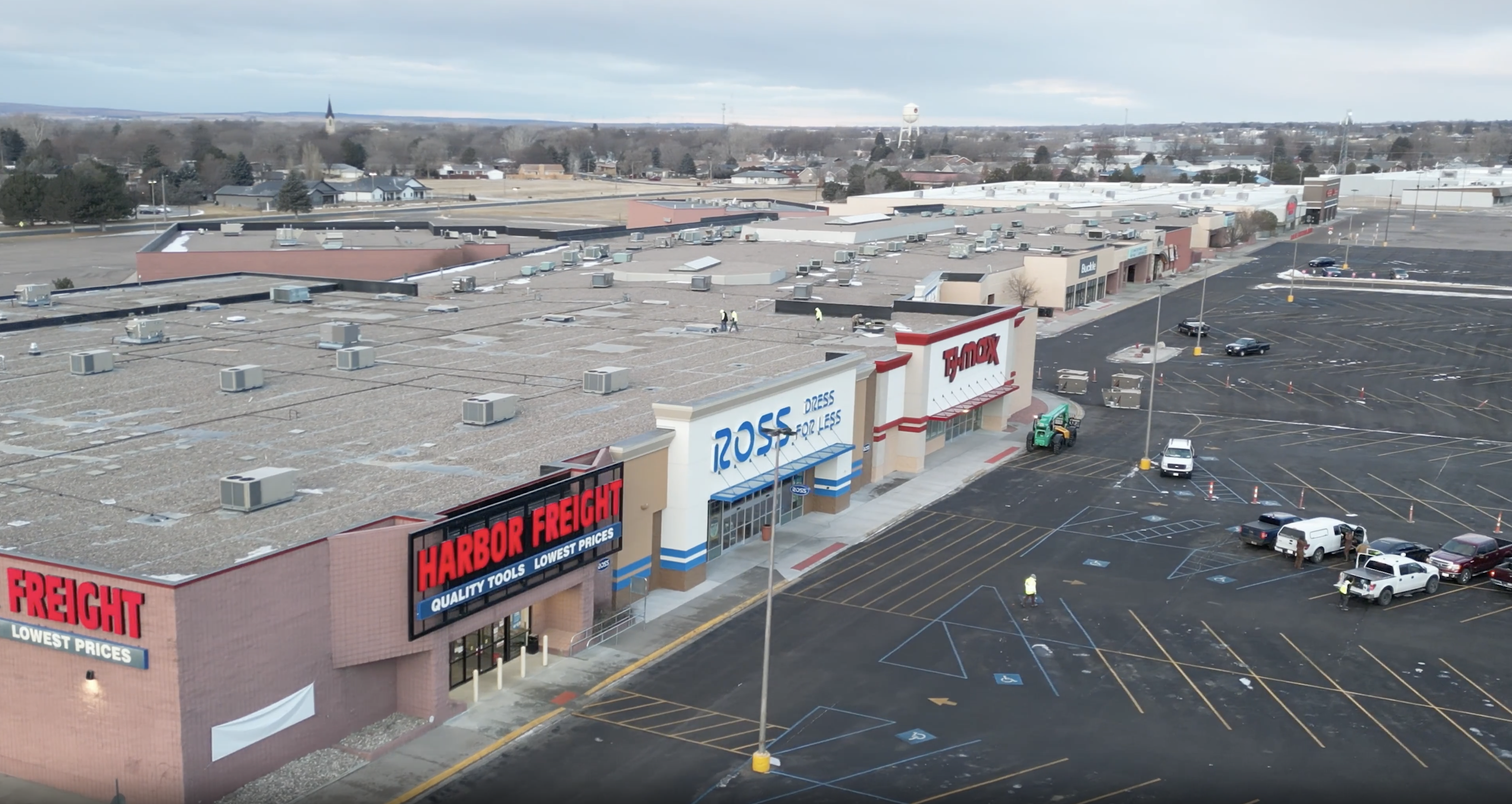

New enclosed malls are rarely built today because the economics and logistics no longer make sense. High construction costs, complex approvals, and long development timelines make new projects risky and hard to justify, especially when existing malls can be acquired at a fraction of replacement cost. This supply constraint can actually benefit current mall owners, as limited new competition supports the value of well-positioned assets.
No one is building new enclosed malls, and that’s not a coincidence.
Recent data on enclosed malls shows a different story than the headlines. Occupancy is stable, net operating income is rising for non-distressed properties, and about half of the U.S. mall supply has been removed since the mid-2000s. The “malls are dead” narrative doesn’t match the numbers.
But there’s a natural follow-up question: if existing malls are performing well, how does the lack of new mall development influence the stability and future returns of the retail real estate market?
In most real estate sectors, strong fundamentals attract new development. Apartment rents rise, prompting developers to build more apartments. Industrial demand increases, and warehouses are constructed everywhere. That’s how the cycle typically works.
Enclosed malls have completely disrupted this cycle, and understanding why is one of the most important insights for anyone evaluating mall investments.
The Last Enclosed Mall Built in The United States
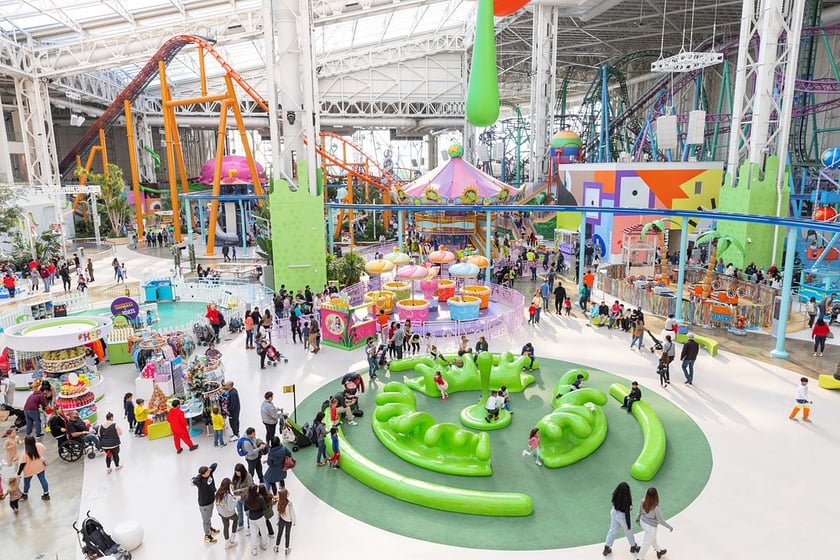
An inside look at the American Dream Mall in East Rutherford, New Jersey
American Dream, the 3-million-square-foot complex in East Rutherford, New Jersey, opened in October 2019. It is the last major enclosed mall built in the United States, and its development history explains why no one else is trying.
The project was originally proposed in the early 2000s and went through multiple developers, bankruptcies, name changes (it was called Xanadu for years), and billions of dollars in cost overruns. From initial concept to opening day, the timeline stretched roughly 15 years, with a final development cost of about $5 billion, making it one of the most expensive retail projects in history.
Importantly, American Dream is not a traditional mall. It includes a water park, indoor ski slope, Nickelodeon theme park, and an NHL-sized ice rink. It functions more as an entertainment destination, with retail included. Even with all of that, it has struggled with occupancy and financial performance similar to those of similar projects.
Nobody looked at that outcome and thought, “We should do that too.” It is the exception that proves the rule.
Why No New Enclosed Malls Are Being Built: Construction Costs
The most straightforward reason no one is building enclosed malls is cost.
Construction costs for enclosed retail spaces usually range from $200 to $400 per square foot, depending on the market and the quality of finish. For a 500,000-square-foot mall (which is modest by historical standards), that amounts to $100 million to $200 million in hard construction costs alone. Once you include land, soft costs, tenant improvements, and financing, the total project costs become very difficult to justify.
The Replacement Cost Gap in Enclosed Mall Investing
Now compare that to acquiring an existing mall. In secondary and tertiary markets, well-performing enclosed malls have traded at $50 to $150 per square foot in recent years. In many cases, investors can acquire a stabilized, cash-flowing mall for a fraction of replacement cost.
This gap matters. When building costs are two to three times the value of existing assets, developers usually neither build nor buy, often doing neither.
This dynamic ties into a perception gap about enclosed malls. For a deeper look at performance versus public perception, see our analysis on whether enclosed malls are a declining asset class.
Zoning and Entitlement Challenges For New Development
Even if a developer had the capital and was willing to take on the economics, the next hurdle is entitlements, and this has become a major barrier.
Enclosed malls require large parcels of land, typically 40 to 80 acres, generate significant traffic, and require extensive parking infrastructure. In earlier decades, local governments were often eager to approve these projects because they generated sales tax revenue and jobs. That environment has changed.
Today, large-format retail developments encounter community opposition, environmental reviews, traffic studies, and zoning restrictions that make obtaining entitlements for new enclosed malls more challenging, impacting future projects and market dynamics.
As a result, getting approvals for a new enclosed mall can take years, cost millions, and still have a high chance of being denied. We’ve spoken with developers who considered the idea, and in many cases, the entitlement process alone is enough to halt the project before it even starts.
Enclosed Mall Supply Decline in the U.S. Retail Market
While no new malls are being built, existing malls continue to exit the market.
Coresight Research estimates that 25 to 30 percent of U.S. malls have been demolished or repurposed since 2010. Some properties have been completely redeveloped into mixed-use projects, distribution centers, or residential communities. Others have been partially converted, with anchor stores repurposed into fulfillment centers, medical facilities, or office spaces, while the remaining retail continues to operate in a reduced form.
This process is ongoing. Each year, additional malls close or are repurposed. The pace has slowed compared to five years ago, but it has not stopped.
So the overall picture is straightforward:
- Supply peaked at roughly 1,500 malls
- Current supply sits around 700 to 800 malls
- No meaningful new supply is being added
- Existing supply continues to decline
The supply line is moving in one direction.
How Supply Reduction Creates Investment Advantages
This is where the investment thesis gets interesting.
In any market, when supply contracts and demand holds steady (or even declines modestly), the remaining supply gains pricing power. That's not a theory. It's arithmetic.
For enclosed malls, supply destruction has several concrete effects:
One: Reduced Competition for Tenants
When a mall closes in a trade area, tenants wanting to stay have fewer options: move to the surviving mall or leave the market. Often, tenants from closed malls relocate directly to RockStep properties. For example, a store earning $400 per sq ft at a dying Class C mall moves to our Class B property and earns $500 per sq ft. The tenant and we benefit, while the closed mall's loss becomes our gain.
Two: Floor Under Occupancy
When there are only two or three malls in a metro area instead of five, occupancy has a natural floor because retailers need physical space. As long as consumer spending exists in a trade area, someone will rent that space.
Three: Significant Rent Growth
With fewer options, tenants have less leverage in lease talks. We aren't gouging, but can modestly raise rents at renewal, especially for good tenants. When leaving the market is the alternative, the conversation shifts.
Four: Cap Rate Compression Over Time
This takes longer to play out, but as the market recognizes surviving malls as scarce assets with durable cash flows, prices should adjust. Early signs are emerging in the institutional market, where some buyers are acquiring mall assets at prices reflecting current operations rather than 2016 distress assumptions.

Why This Matters For Investors
We’re not suggesting that every enclosed mall represents a strong investment. Property selection, market demographics, tenant mix, and management all still matter.
But the structural supply picture is difficult to ignore.
- No new enclosed mall supply is being added
- Existing supply continues to shrink
- Construction costs make new development uneconomic
- Entitlement barriers make projects difficult, even if economics improve
- Market perception has not fully adjusted to these realities
This combination is relatively uncommon in commercial real estate.
The supply cliff does not fix a weak property. But for a well-located mall in a solid market, it creates a structural advantage that can compound over time, with fewer competitors, more tenant demand per remaining square foot, and a competitive position that strengthens as more marginal properties exit the market.
How To Evaluate Individual Enclosed Mall Investment Opportunities
Even if a developer had the capital and was willing to take on the economics, the next hurdle is entitlements, and this has become a major barrier.
Today, large-format retail developments face several challenges:
- Community opposition
- Environmental review requirements
- Traffic and infrastructure studies
- Competing political priorities
Many municipalities have also updated zoning codes to discourage large-scale retail in favor of mixed-use development.
As a result, securing approvals for a new enclosed mall can take years, cost millions, and still carry a high risk of denial. Our team at RockStep Capital has spoken with developers who explored the idea, and in many cases, the entitlements process alone is enough to stop the project before it begins.
Put simply, it’s not just that developers aren’t building new enclosed malls. In many cases, they can’t.
Topics: