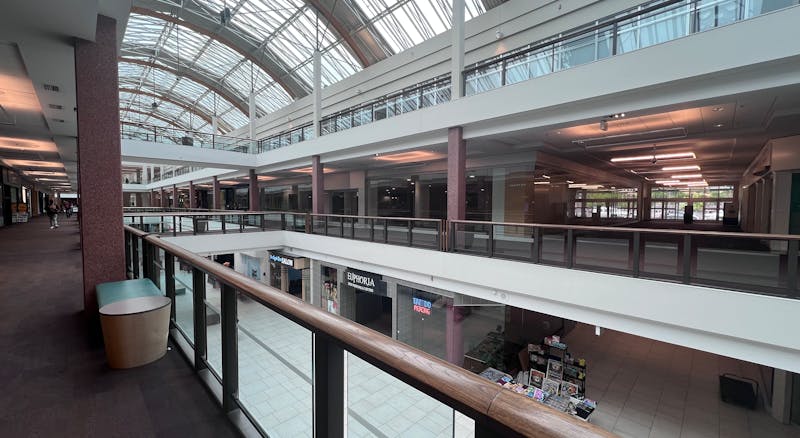

Acquiring enclosed malls successfully starts with buying the right asset at the right basis, not avoiding the asset class altogether. Investors should focus on dominant regional malls with strong locations, healthy tenant demand, and pricing well below replacement cost, while carefully evaluating local market dynamics, lease structures, and repositioning opportunities. With disciplined underwriting and active management, these overlooked properties can deliver compelling long-term value.
Most distressed mall deals sound simple. They aren’t.
We talk to many investors who have heard the headline: enclosed malls can be acquired at steep discounts out of distress. That part is true. What’s less discussed is how those deals actually happen, and why they’re rarely as simple as “buy low, fix it, profit.”
In practice, distressed mall acquisitions are complex, time-consuming, and operationally focused. This article explains how the process works from initial distress to closing and early repositioning, emphasizing timelines, risks, and where value is actually created.
How Malls End Up in Distress in Retail Real Estate
The path to distress is usually a combination of three factors, and rarely just one.
One: Overleveraged Capital Structures
During the 2005–2015 cycle, many enclosed malls were financed with CMBS loans at 70-80% loan-to-value ratios based on peak valuations. When those valuations declined, borrowers found themselves underwater. White Marsh Mall in Baltimore is a recent example: its appraised value dropped 73% from $300 million in 2013 to $80 million by mid-2024.
At that point, refinancing and selling become challenging, and additional equity often isn't enough to solve the problem. It’s similar to owning a house with a mortgage much higher than the home's current value, but on a much larger and more complex scale.
Two: Deferred Maintenance
Owners who realize they’re losing money on a property tend to stop investing in it. Systems break down, parking lots deteriorate, and the overall environment worsens.
That decline causes tenant departures, which lowers income and results in even less reinvestment. Once this cycle begins, it tends to speed up, much like a car that hasn’t been serviced in years, which gradually starts to break down.
Three: Anchor Departures
When a major tenant like Sears, JCPenney, or Macy’s closes, the effects extend beyond just losing rent. Many leases include co-tenancy clauses that allow tenants to pay less or end their lease early.
One anchor closure can trigger a chain reaction that greatly decreases revenue within a year. Basically, it’s like losing the main attraction in a shopping district and seeing the neighboring stores gradually lose traffic.
By the time these factors align, the property usually cannot sustain its debt, and the loan is transferred to a special servicer.

Understanding the CMBS Special Servicing Pipeline in Retail Real Estate
According to Trepp, the CMBS special servicing rate hit 10.84% in October 2025, marking a 12-year high. Retail has been a major contributor, with rates staying elevated throughout the year.
Practically, this amounts to tens of billions of dollars in loans that are no longer performing as expected.
Why Distressed Retail Loans Create Acquisition Opportunities
For investors, this matters because it builds a steady stream of distressed opportunities. These are not isolated deals but are part of a larger cycle linked to capital markets and refinancing conditions.
You can think of it as a backlog of properties moving through the system, similar to inventory accumulating before it’s finally cleared.
What a CMBS Special Servicer Does in Distressed Mall Acquisitions
A special servicer is not an operator. They serve as a financial intermediary acting on behalf of CMBS bondholders, aiming to maximize loan recovery.
In most cases, they evaluate three paths:
- Loan modification - Adjusting terms to stabilize the asset and return the loan to performing status
- Foreclosure and REO sale - Taking control of the property and selling it to a new owner
- Discounted payoff (DPO) - Allowing the note to be purchased at a discount, often by a third party
Why Special Servicer Incentives Create Buying Opportunities
Their incentives are linked to resolution rather than long-term ownership. They are not repositioning assets or handling leasing strategies. Their aim is to remove the asset from their books.
That sense of urgency is where opportunities start for experienced operators. In many ways, they act more like workout specialists than long-term owners.
Step-by-Step Process of a Distressed Mall Acquisition
A distressed mall acquisition typically takes between 9 and 18 months, but timelines can extend depending on legal complexity.
Identification and Initial Diligence (Months 1–3) - We monitor CMBS data, court filings, and market activity. When a loan enters special servicing, we assess fundamentals such as demographics, competition, and tenant mix. Most opportunities are screened out early.
Receivership or REO Phase (Months 3–9) - If the borrower cannot resolve the default, a receiver is appointed to manage the property. Their role is to keep the basic operations running, not to make improvements.
Negotiation with the Special Servicer (Months 6–14) - Buyers submit offers, conduct thorough due diligence, and negotiate prices. These transactions involve additional constraints, such as appraisal requirements and bondholder approval.
Title Clearing and Closing (Months 14–18) - Distressed assets often involve liens, legal claims, and tax issues. Resolving these matters is part of the closing process and can add time and complexity. It’s not uncommon for this stage to feel more like untangling a knot than carrying out a standard closing.
How Investors Create Value in Distressed Mall Acquisitions
Discounts of 50 to 80% from prior valuations are common in distressed mall transactions. However, the purchase price is only part of the story.
Value is created through three primary levers:
- Resetting the capital structure
- Addressing deferred maintenance
- Rebuilding tenant economics
Why Operational Execution Drives Returns in Retail Real Estate
This combination of lower basis and operational improvements drives returns. A helpful way to think about it is to buy something that has been neglected, restore it, and then manage it more effectively over time.

Key Risks in Distressed Retail Real Estate Investing
Distressed acquisitions entail significant risks, and understanding them is essential.
Primary Risks in Distressed Mall Investments
- Environmental issues
- Lease complexity
Additional Risks to Consider in Distressed Retail Deals
- Underestimated capital needs
- Extended timelines
Each of these risks is manageable, but they require experience and careful planning.
Why This Matters for Real Estate Investors
Distressed mall acquisitions are often presented as a chance to buy at a discount, but in reality, they are driven by an execution-focused business plan. Knowing how these deals actually develop helps investors look beyond the headline discount and concentrate on what truly influences results.
For newer investors, expectations often shift. A lower purchase price offers safety but doesn't eliminate operational issues such as leasing, improvements, and delays, which require active management and can impact returns.
A helpful way to understand it is the difference between the potential to buy and actually doing so. The acquisition provides the opportunity, but the results rely on how well that opportunity is executed over time.
Assessing the operator is crucial to investment decisions, as experience, access to capital, and the ability to navigate uncertainty determine success in distressed acquisitions.
Final Thoughts on Distressed Mall Investment Strategies
Distressed mall acquisitions are not quick-turnaround opportunities. They demand patience, coordination, and a readiness to handle uncertainty at various stages of the process.
For investors, understanding how these deals unfold offers a more practical way to evaluate them. It shifts the focus from headline prices to execution, where the true results are ultimately decided.
In the next article, we’ll compare enclosed malls and open-air shopping centers, examining how each performs and where each fits within a retail investment strategy.
Topics: