

Replacement cost is a powerful concept in retail real estate because it compares what an existing property costs to buy with what it would cost to build the same asset today. When quality shopping centers or enclosed malls trade well below replacement cost, investors may gain a meaningful margin of safety and long-term upside, especially in markets where little or no new competing supply is being built.
Every so often, pricing and reality drift apart, and that’s where things start to get interesting.
One of the first questions we get from investors evaluating an enclosed mall acquisition is straightforward: How do I know if this is actually cheap, or just cheap for a reason?
It’s the right question to ask. One of the most effective ways to answer it is through replacement cost analysis, which compares the cost to build a property today with its current market value.
In today’s enclosed mall market, that gap is notably wide. However, a large gap alone doesn’t signal an opportunity. The key insight lies in understanding what’s driving it and whether it indicates mispricing or underlying risk.
How to Tell If a Mall Is Cheap or a Value Trap
Let’s begin with construction.
According to RSMeans and industry data compiled by SteelCo in late 2025, building an enclosed mall today costs between $250 and $450 per square foot. The variation depends on location, complexity, and the amount of common area included in the design.
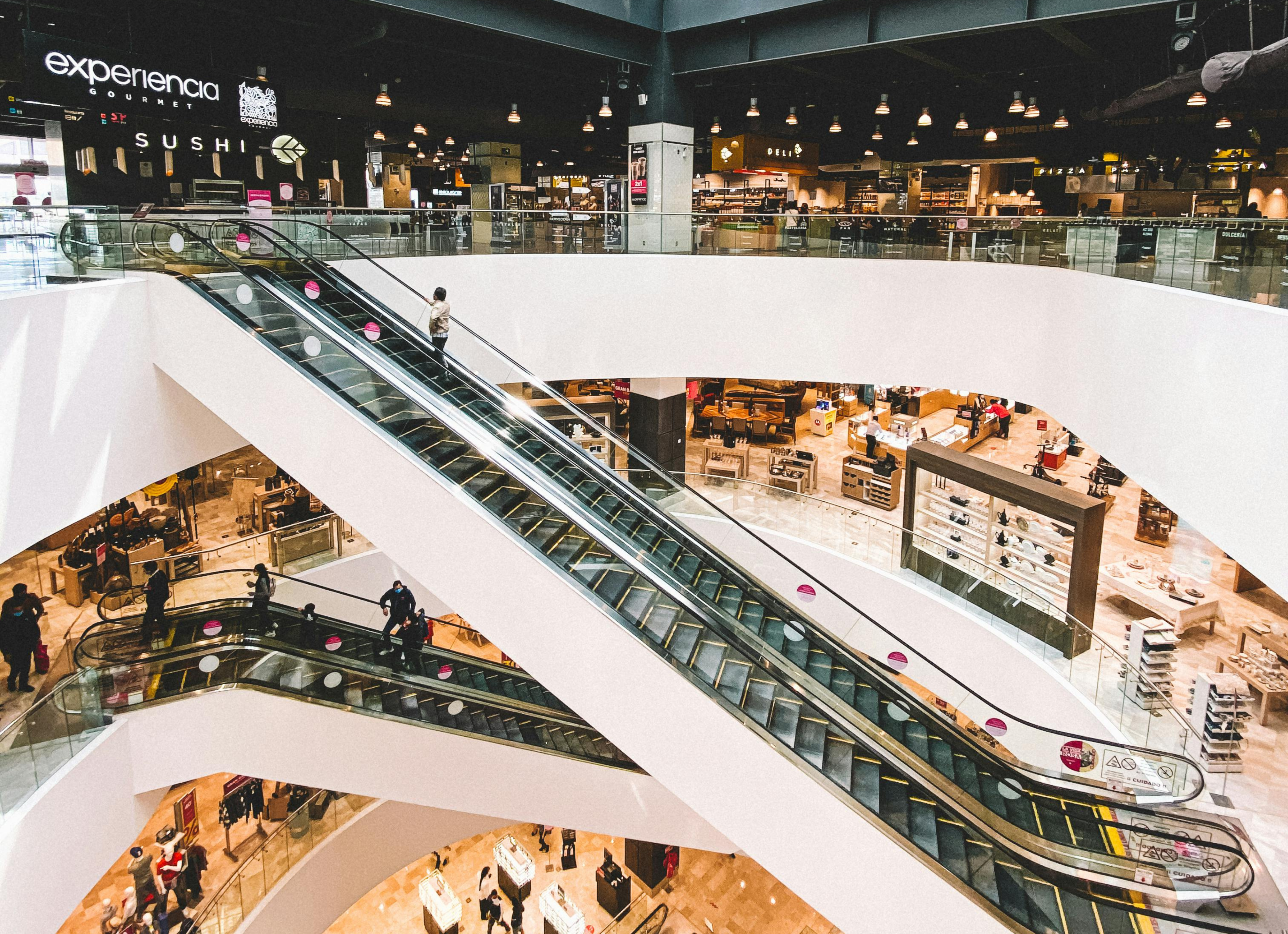
That estimate covers all development aspects, including structural systems, large HVAC systems, escalators, safety systems, parking, and retail space. Building an enclosed mall is more like creating a small climate-controlled city than a single building.
What Drives Enclosed Mall Construction Costs Higher
In lower-cost tertiary markets, simpler projects are at the lower end of the range, while complex projects in higher-cost markets can exceed $400 per square foot.
Additional data from Cushman & Wakefield’s 2025 Retail Fit Out Cost Guide shows that in-line store buildout averages $155 per square foot, covering only interior work. Combined with shell construction, site work, entitlements, and tenant improvements, the total cost for a new enclosed mall exceeds $300 per square foot in most markets.
It’s important to note these figures are largely theoretical, as there’s no real pipeline of new enclosed-mall construction. Estimates rely on comparable projects rather than recent examples.
What Malls Are Trading for Per Square Foot
When you compare those construction costs to actual transaction prices, the disconnect becomes clear. Over the past few years, enclosed malls in secondary and tertiary markets have traded between $30 and $80 per square foot.
Investors often think about pricing in tiers:
- Below $30 PSF: typically distressed or heavily impaired assets
- $40 to $60 PSF: value-add opportunities with leasing or capital needs
- $70 to $90 PSF: more stabilized properties in stronger markets
Real Example of Mall Pricing vs Replacement Cost (Greenwood Mall Case)
At the lower end, distressed CMBS workouts and special servicer sales have driven prices below $30 per square foot. At the higher end, properties with higher occupancy and more stable income can reach $80 or $90 per square foot.
Greenwood Mall in Bowling Green, Kentucky, provides a useful reference point. The property totals 599,525 square feet. At $54 per square foot, that implies a purchase price of approximately $32 million.
To build that same asset today would likely cost between $150 million and $210 million. That equates to a replacement cost discount of roughly 78 to 85%.
Another way to think about it: it’s like buying a fully built hotel for the price of the land and the parking lot. The structure, infrastructure, and income stream are all included, but the pricing reflects a market that has stepped away.
At that point, the natural question becomes: what is driving such a wide gap?
Why Do Malls Trade Below Replacement Cost?
Several overlapping factors influence this pricing dynamic. Some present opportunities, while others pose genuine risks. Recognizing the difference is crucial.
From a practical perspective, these drivers fall into two categories: broader market forces and property-specific realities.
Market sentiment was influential. The “malls are dead" story from 2010-2018 caused many investors to abandon the sector, often permanently. Markets, like people, remember long.
Capital allocation trends have confirmed that shift. Institutional capital has shifted significantly toward industrial and multifamily assets, reducing retail's share of investment activity. Meanwhile, CMBS-related distress has led to a steady flow of properties being sold under time pressure.
When Low Mall Prices Signal Risk Instead of Opportunity
At the property level, however, some discounts are justified. Certain malls face structural challenges that cannot be ignored. These may include:
- Significant deferred maintenance
- Vacant or non-performing anchor spaces
- Aging systems that require substantial reinvestment
- Trade areas with declining or insufficient demand
A low price in these cases isn’t inefficiency but shows limitations. Buying such properties cheaply can be like buying a car at a discount, only to discover the engine needs replacing.
The difference between market-driven pricing and asset-level risk is where investment judgment becomes most crucial.
Greenwood Mall and the Math Behind Buying Below Replacement Cost
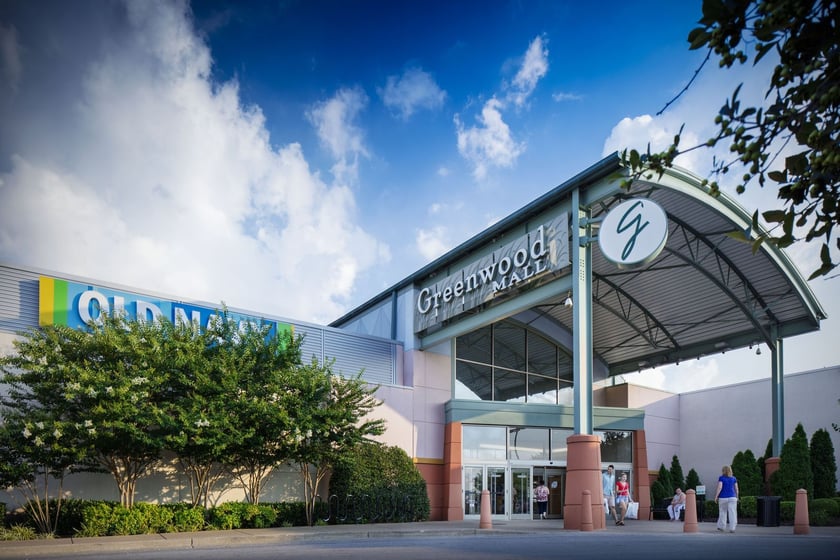
Examining Greenwood Mall more closely demonstrates how these dynamics unfold in practice.
The property is situated in Bowling Green, Kentucky, a market with roughly 80,000 residents in the city and about 180,000 in the wider metro area. It hosts Western Kentucky University and benefits from a diverse local economy.
At $54 per square foot, the purchase price amounts to about $32 million. Rebuilding a similar property today would probably cost between $150 million and $210 million.
Why Buying Below Replacement Cost Creates a Margin of Safety
Another way to frame this is to look at what the acquisition avoids:
- Bypassing current construction costs
- Avoiding entitlement timelines and development risk
- Acquiring an existing income-producing asset
Often, the purchase price equals or falls below the value of the land and infrastructure, providing a safety margin. Starting lower is like beginning a race halfway; modest performance can still yield acceptable returns when the entry cost is below the replacement value.
Cap Rates: How Pricing Reflects Risk in Retail Real Estate
Cap rates offer another perspective on how the market is assessing enclosed malls. According to CBRE’s 2025 Cap Rate Survey, retail cap rates have risen for nine straight quarters, with enclosed malls trading in the 12 to 15 percent range.
By comparison:
- Multifamily assets are typically in the 5 to 6 percent range
- Industrial properties are often between 5 and 5.5 percent
How Cap Rates and Replacement Cost Work Together
These spreads reflect the additional risks associated with enclosed malls, such as leasing variability, capital expenditure needs, and tenant turnover.
You can think of cap rates as the market’s method of pricing uncertainty. The higher the perceived risk, the higher the expected return. However, when those higher cap rates are coupled with significant discounts to replacement cost, it suggests the market might be using too broad a brush.
When fewer buyers are willing to step in, prices often adjust beyond what fundamentals alone would justify.
Limitations of Replacement Cost Analysis in CRE Investing
Replacement cost is a helpful reference, but it doesn't show the full picture.
It does not indicate whether a market can support the existing square footage, nor does it consider functional obsolescence or changing consumer preferences.
What Replacement Cost Does Not Tell You About Mall Investments
It also does not account for:
- Capital expenditures required after acquisition
- Local competition or evolving retail formats
- Tenant quality and lease durability
In that sense, relying only on replacement cost is similar to valuing a business based solely on the cost to build the storefront, without considering whether customers are still coming in.

Why This Matters For Real Estate Investors
For investors who are new to commercial real estate, replacement cost offers a clear way to frame value. It helps answer a straightforward question: Are you buying an asset at a price that provides flexibility?
How Replacement Cost Helps Reduce Downside Risk for Investors
Acquiring a property at a discount to replacement cost lowers the investment basis, enabling conservative assumptions and cushioning against downside risks.
However, that advantage only applies if the asset itself is viable. A low price can be either a cushion or a warning, and part of the investor’s role is to determine which one it is.
Using Replacement Cost to Evaluate Mall Investment Opportunities
Replacement cost doesn’t tell you everything, but it offers important context. It illustrates how unusual the current pricing is and encourages closer examination of whether it is justified.
Markets cycle between attention and neglect. Enclosed malls, pushed aside by sentiment, capital, and retail shifts, often have prices that do not align with their building and operating costs.
Investors should examine the disconnect, as it provides a reason to look more closely, even if not every property is a good opportunity.
In the next article, we’ll walk through how we underwrite one of these acquisitions in practice.
Topics: