
Department store closures do not automatically signal the decline of a shopping center. While losing an anchor tenant creates challenges, it can also open the door to stronger retailers, entertainment, dining, healthcare, or mixed-use concepts that better reflect today's consumer demand. For investors, the key is evaluating how well the sponsor can reposition the space and create long-term value from the transition.
Most investors assume a department store closing is bad news. In many cases, it’s the opposite.
If you're evaluating an enclosed mall investment, one question tends to surface quickly: "What happens if Macy's closes?"
“Or JCPenney?”
“Or whichever anchor tenant is driving traffic today?”
It’s a fair concern. Anchor departures can disrupt a mall's ecosystem, trigger co-tenancy clauses, unsettle tenants, and create negative market perception.
But the data tells a more nuanced story. In well-located malls with capable operators, a department store closure is often not the start of a decline but the beginning of a stronger, more productive rent roll.
That shift comes down to execution and economics. Let’s take a closer look.
Why Department Store Closures Matter in Mall Performance
Anchor departures are disruptive and often set off a chain reaction, triggering co-tenancy clauses, unsettling inline tenants, and generating headlines that make the situation look worse than it is.
These closures are significant. Sears shrank from about 3,500 stores in the mid-2000s to fewer than 10 today, nearly wiping out the chain. JCPenney closed about 200 stores during its 2020 bankruptcy and plans more closures, including eight in 2025.
Macy's announced its "Bold New Chapter" plan in February 2024, aiming to close 150 stores by 2026: 50 in 2024, 66 in 2025, and 14 in 2026.

Why Anchor Closures Aren’t Always a Negative for Mall Owners
When an anchor goes dark, it can feel like losing the engine of an airplane mid-flight.
But over the past decade, the data tells a more balanced story. For well-located malls with capable operators, a department store closure is often less of a setback and more of an opportunity to improve the rent roll.
In many ways, it’s less like an engine failure and more like a pit stop. Done poorly, it slows everything down. Done well, it sets the property up to run more efficiently than before.
That’s not spin, it’s math. Let’s walk through why.
Department Store Closures Are Reshaping Real Estate
With more than 1,000 anchor boxes going dark since 2015, mall owners have been forced to rethink how they use large-format space.
Add in Bon-Ton (all 256 stores, closed in 2018), Stage Stores (all 738 locations, liquidated in 2020), and the steady drip of Nordstrom and Dillard's repositioning, and we’re talking about well over 1,000 department store anchor boxes that have gone dark since 2015.
That level of change has reshaped mall real estate across the country. It’s similar to what happens when a major highway reroutes traffic. Patterns shift, tenants adjust, and new opportunities emerge where old ones no longer work.
The question is no longer whether closures happen. It’s how effectively operators respond when they do.
Why Department Store Anchors Pay Below-Market Rent
Here’s something most passive investors don’t realize: department store anchors were terrible tenants from a rent standpoint.
Many of these anchors owned their boxes outright, paying no rent to the mall. Others operated under leases signed in the 1970s, 1980s, or 1990s, with effective rents of $2 to $5 per square foot.
The Income Opportunity Created by Anchor Tenant Replacement
Jim Sullivan, managing director at BTIG, has publicly said that Sears was paying little to no rent at many locations. Macy's legacy lease rates at older malls frequently fell below $4 PSF.
Compare that to a subdivided anchor box, which replaces a single $3 PSF department store with multiple tenants paying $10-$20 PSF. ICSC data from early 2024 shows that landlords who backfilled vacated anchors saw 60% rent growth. U.S. shopping center occupancy reached 92% by late 2023 despite closures.
The department store was generating foot traffic. That matters. But it wasn’t generating rent proportional to the square footage it occupied.
Backfill Strategy #1: Subdividing Anchor Space for Higher Rent
This is the most common playbook, and it works. Take a 150,000-square-foot department store box and divide it into three to five spaces for tenants who pay market rent.
Best Tenants for Subdivided Anchor Spaces in Shopping Centers
The usual suspects for backfill include:
- Dick's Sporting Goods (typically taking 40,000 to 60,000 SF)
- Burlington (25,000 to 50,000 SF)
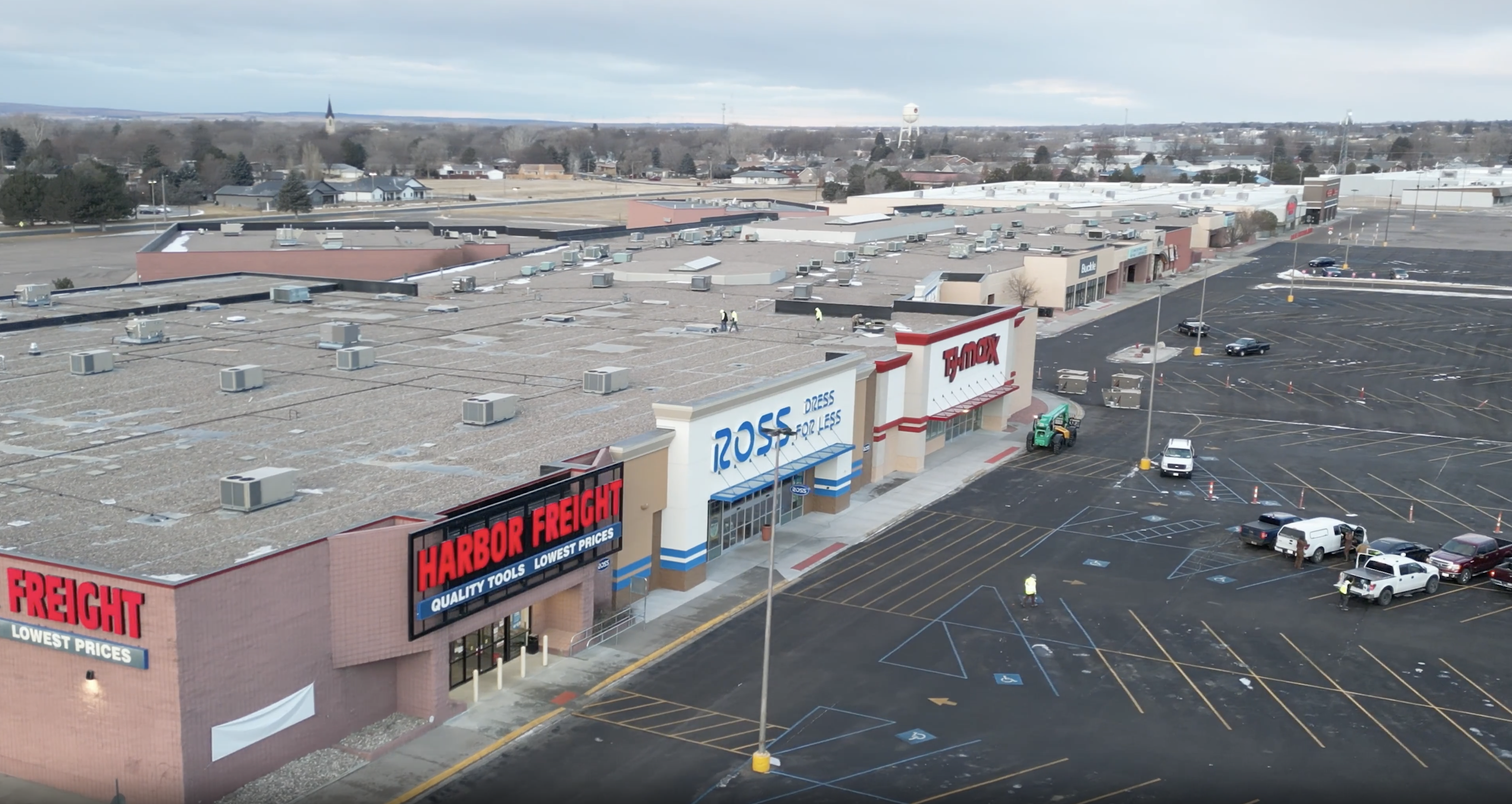
- Ross Dress for Less and T.J. Maxx
- Five Below and Ulta Beauty
- Fitness operators like Planet Fitness or Crunch
Each of these tenants pays meaningfully more per square foot than the departed anchor.
A concrete example: Simon Property Group has been aggressively subdividing former Sears boxes across its portfolio. A typical conversion replaces a 120,000 SF Sears with a Dick's Sporting Goods, a Burlington, and a couple of smaller inline tenants. Total rent from the subdivided space often runs two to four times what Sears was paying.
The BTIG analysis put it bluntly: Sears was doing about $100 per square foot in sales. A 12,000 SF Cheesecake Factory does roughly $1,200 per square foot. You can replace all of Sears' sales productivity with a single restaurant.
Backfill Strategy #2: Entertainment and Fitness Tenants for Mall Traffic
Round 1 Entertainment has become one of the most aggressive backfill tenants in enclosed malls.
How Entertainment Tenants Increase Foot Traffic in Malls
The Japan-based operator has been taking former anchor spaces of 50,000 to 80,000 SF at malls across the country. Recent openings include Stonestown Galleria in San Francisco and Stonewood Center in Downey, California.
Other entertainment conversions include:
- Dave & Buster's
- Main Event
- Trampoline park operators
- Life Time and Planet Fitness
These tenants don’t pay as much per square foot as off-price retail, but they generate traffic at hours when the mall would otherwise be quiet. Evenings and weekends.
Backfill Strategy #3: Converting Anchor Space to Non-Retail Uses
This is where things get interesting.
Non-Retail Uses for Vacant Anchor Spaces in Shopping Centers
Former department store boxes have been converted to:
- Medical facilities
- Community college campuses
- Government offices
- Call centers
Medical users are particularly compelling. An urgent care clinic or imaging center doesn’t compete on e-commerce. The patient has to show up in person. These tenants also tend to sign longer leases, often 10 to 15 years.
When Mall Anchor Backfill Strategies Fail
It would be dishonest to present this as universally positive. Backfill fails in specific, predictable circumstances.
Location quality: A Class C mall in a declining market with a decreasing population won't attract quality tenants, regardless of cheap rent. The absent anchor isn't the cause, but a symptom. The 200-300 enclosed malls expected to close are mostly in markets where no backfill strategy will succeed because of trade-area deterioration.
Ownership structure: Some anchor boxes are owned by the department store chain rather than the mall. Sears owned many through a subsidiary. When the chain goes bankrupt, the boxes enter a separate disposition process outside the mall's control, causing vacancy as legal issues are resolved.
Capital requirements: Dividing a single-tenant space into multi-tenant needs investment in walls, HVAC, storefronts, fire suppression, and utilities, costing $30 to $60 PSF depending on scope. Without capital or the willingness to invest, the space may remain unused for years.
Co-tenancy clause cascade: This is the real risk to watch. Many tenant leases include co-tenancy clauses allowing rent cuts or lease terminations if anchor tenants close and aren't replaced within 12-18 months.
The clock starts ticking the day the anchor goes dark. Operators who have pre-negotiated LOIs with replacement tenants before the closure happens are in a completely different position than those who start marketing an empty box after the fact.

How Long Does It Take to Backfill Anchor Tenant Space?
Realistic timelines range from 12 to 36 months.
That range reflects the number of variables involved. Gaining control of the space, finalizing redevelopment plans, securing permits, and negotiating leases with large-format tenants all take time.
What Impacts Anchor Tenant Backfill Timelines?
Large anchor spaces take longer to convert due to the complexity of the conversion and a smaller pool of tenants capable of absorbing 40,000 square feet or more.
Operators who perform best already have relationships and plans in place before a closure happens. In those cases, the process feels more like a transition. Without that preparation, the same vacancy can stretch out and become a drag on the property.
What This Means for Real Estate Investors
For investors, a department store closure is less about the vacancy itself and more about what it reveals. It highlights whether the operator has the experience, capital, and relationships needed to execute a repositioning strategy.
In many ways, this is where the gap between average and top-tier operators becomes most visible. Anyone can manage a stabilized asset, but repositioning a large anchor space requires planning, speed, and a clear understanding of tenant demand.
Value in retail real estate is often created during periods of disruption. A dark anchor box may look like a risk, but in the right hands, it can become a driver of higher income and a stronger tenant mix.
Final Thoughts on Mall Redevelopment After Anchor Closures
A closing anchor changes the trajectory of a property, but it doesn’t decide the outcome. What it really does is force a choice. Operators can treat the vacancy as a problem to solve, or as a chance to rethink what the property should be.
The strongest operators don’t try to recreate what was lost. They use the moment to build something better. That might mean higher-paying tenants, uses that drive traffic at new hours, or entirely different concepts that make the asset more stable over time.
For investors, the takeaway is simple. The opportunity is in recognizing when it creates the conditions for a stronger deal.
Topics: