

Don't dismiss an unfamiliar market simply because it is hard to find on a map. Retail investors should look deeper at trade area demand, retailer interest, local economic drivers, competition, purchase basis, and leverage to determine whether the opportunity works. Disciplined underwriting can reveal strong HomeTown deals that other investors overlook because they mistake unfamiliarity for risk.
If the first reason to dismiss a retail deal is “I can’t find it on a map,” the real opportunity may not be the market. It may be the work other investors skipped.
One of the quickest ways an investor can pass on a smaller-market retail deal is to say, “I can’t find it on a map.” The RockStep team understands that instinct. If we do not know a market, it can feel riskier. If we have never been there, we may lack a clear picture of the customer, trade area, or local economy.
If a town does not come up in typical real estate conversations, the safest answer may seem to be no. But map familiarity is not investment analysis.
Knowing a city’s name does not mean we understand the risk, and not knowing it does not mean the risk is unacceptable. A map cannot underwrite the trade area, tenant demand, or basis of a retail deal. It is the restaurant menu, not the meal.
That matters because familiar markets already come with a story, while unfamiliar markets require us to build one from scratch.

Why Familiar Markets Can Create False Confidence In Retail Investing
The problem with familiarity is that it can feel like knowledge. When we hear Austin, Dallas, Nashville, Tampa, or Phoenix, the market often comes with a story: population growth, jobs, in-migration, lifestyle, capital flows, and familiar headlines. But a good story is not the same as a good basis, and market name does not change the investment math.
That story may be true. It may also be fully priced. A market can be strong and still produce a weak investment if the basis is too high, the debt is too expensive, or the return depends on assumptions that leave little room for error.
Why A Familiar Market Name Does Not Protect The Math
Think of it like buying a house in a neighborhood everyone loves. The location may be desirable, but if the price is too high and the roof is failing, the address will not fix the math. Retail real estate works the same way. A familiar market name can make a deal easier to explain, but it does not make the investment safer.
The reverse is also true. When a market lacks a familiar reputation, the absence of an easy story can seem like a problem before the facts are even studied.
Why Unfamiliar Retail Markets Need Underwriting, Not Assumptions
When we hear about a smaller town in Northeast Texas, Nebraska, Louisiana, Arkansas, Kansas, Oklahoma, Tennessee, or Alabama, the story is not preloaded, so many investors stop there.
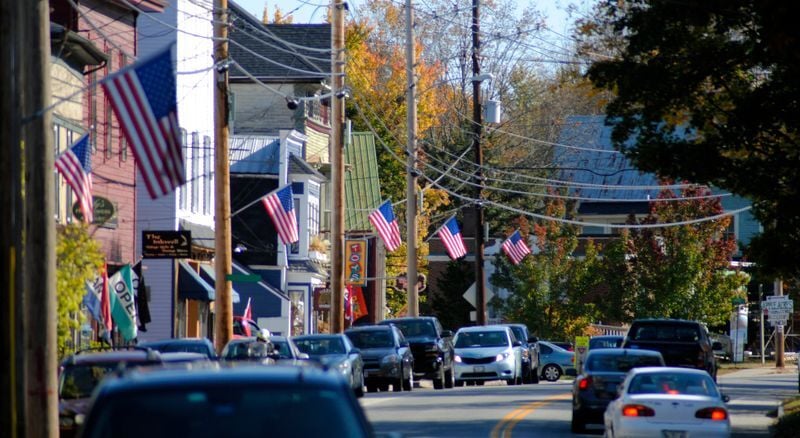
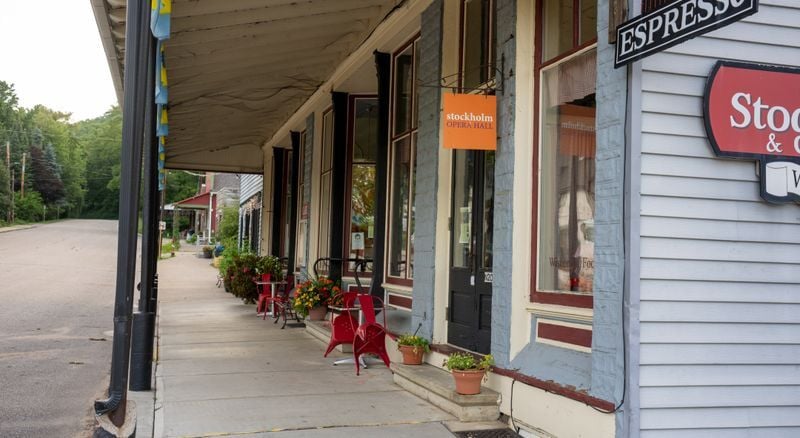
But an unfamiliar story is not the same as unacceptable risk. It might be weak, or it might be a regional retail hub with a university, hospital district, military base, tourism demand, strong schools, growing rooftops, and eager retailers.
We cannot know from the first reaction alone; we have to underwrite it. The Northeast Texas example shows why: market reaction and actual buyer demand can tell very different stories.
What A Northeast Texas Retail Deal Revealed About Smaller Market Demand
The RockStep team reviewed an open-air center in a smaller Northeast Texas market. Several investors were uneasy about the unfamiliar, non-institutional location.
We understand that reaction, but the process drew about 20 bidders, and the winning bid came in roughly $5 million above our number. That did not make the market a sure winner, but it showed that discomfort and demand were moving in different directions.
Why Investor Discomfort Is Not The Same As Retail Market Demand
The Northeast Texas result does not prove the winning bidder was right or everyone else was wrong. We are disciplined buyers, and many deals are worth passing on. But it shows that investor discomfort and market demand are not the same.
Some investors disliked the map, while buyers liked the asset. The market drew real competition. The point is not that every unfamiliar market is attractive. It is that emotion is no substitute for disciplined underwriting. To get past that first reaction, we have to study what the map cannot show.
What A Map Cannot Tell Retail Real Estate Investors?
A map can show where a town is, but not whether the investment thesis holds. It does not explain demand, tenant interest, or a retail asset’s role in its trade area.
That is why underwriting must go deeper. Before dismissing a smaller market because it looks unfamiliar, the RockStep team looks at what the map leaves out:
- Whether the trade area is underserved. A town may serve more customers than its city population suggests.
- How far the nearest competing retail node is. A 10-minute drive and a 45-minute drive can tell very different demand stories.
- Whether local institutions draw people into the market. A hospital, college, courthouse, or sports complex can bring customers from surrounding communities.
- Whether retailers are already looking for space. A retailer may have wanted the right box for years, even if investors are just noticing the market.
- Whether the best retail asset in town matters more than the population number suggests. A modest town on paper may still be where nearby communities go for groceries, sporting goods, healthcare, restaurants, and weekend errands.
These details matter when assessing whether a deal works. A map can help orient us, but it does not show whether the market can support the investment. One of the best ways to test that support is to look at what retailers are already doing.
Retailer Demand Can Reveal Overlooked HomeTown Markets
Retailers often see a HomeTown market before institutional investors do, because they focus on the customer rather than the market’s reputation.
When retailers evaluate a market, they look at things like:
- Customer patterns. Who shops there, how often, and from how far away?
- Access and visibility. Can customers easily reach and see the store?
- Co-tenancy and competition. Which retailers are nearby, and where are the gaps?
- Store spacing and logistics. Does the location fit the retailer’s network?
- Unit economics. Can the store perform well enough to justify opening?
That is one reason the RockStep team likes the 12-in-8 approach: tracking 12 growth retailers across 8 target markets. We look at where they are, where they are not, where peer retailers cluster, and where tenant conversations point next.
Why Retailer Demand Can Create A HomeTown Retail Advantage
The question is not, “Is this market famous?” The better question is, “Does the retailer want to be there, and can we provide the real estate at a basis that makes sense?”
If so, the market’s obscurity may help us. It could mean fewer bidders and less capital chasing the deal. That does not mean every overlooked market is good. It means we have to separate markets overlooked for the wrong reasons from those weak for real reasons.
Why Overlooked Retail Markets Are Different From Weak Markets
An unfamiliar market is not automatically a good market. We are not arguing for buying anything obscure simply because other investors have not studied it.
The discipline is separating overlooked from weak. There is a big difference.
What Makes An Overlooked Retail Market Worth Studying?
An overlooked market may still have real retailer demand, trade-area pull, local support, and a property that can be owned at a sensible basis. A weak market is not overlooked; it is one where demand is absent, no matter how attractive the asset looks.
That distinction is where the work matters. It also changes the questions we ask next.
Better Questions To Ask About An Unfamiliar Retail Market
When an investor says, “I can’t find it on a map,” we think the next response should be, “Then let’s find the demand.”
That shift matters because it moves the discussion from emotion to investment judgment.
Instead of stopping at whether the town feels familiar, we should ask the questions that show how the market actually works:
- What is the real retail trade area? The city population may not reflect the full customer base.
- Which retailers are already there? Existing tenants can help validate demand.
- Which retailers are missing but active in comparable markets? Gaps in the tenant mix may indicate opportunities.
- How far do customers drive for this category? Drive time can matter more than city boundaries.
- What anchors the local economy? Universities, hospitals, employers, tourism, and military bases can all shape demand.
- Is the property the best retail node in the market? A strong location in a smaller market may matter more than a weaker location in a familiar one.
- Is there useful second-generation space? Existing boxes can help retailers enter the market more efficiently.
- Does the debt create positive leverage? The capital structure should support, not strain, the investment.
- What has to go right for the return to happen? The best deals do not depend on every assumption breaking perfectly.
Sometimes the answers tell us to pass. Passing for the right reason is discipline; passing because a town is unfamiliar is a shortcut. That helps separate real market weakness from the risks smaller markets can carry. Even when the answers are encouraging, smaller markets still carry real risks that deserve serious attention.

Why Smaller Markets Carry Real Retail Investment Risk
Smaller markets carry real risks. Tenant replacement may be thinner; the buyer pool is smaller. Smaller markets are more concentrated, so if demand is misread, recovery options may be limited.
That is why underwriting matters: it helps separate manageable risks from those too great to accept. A HomeTown retail strategy is not a reason to buy any small-market deal just because the price is low.
The goal is not to assume smaller markets are safe by default, but to identify which risks are real, which are priced in, and which are exaggerated by unfamiliarity. The same discipline should apply in the other direction because familiar markets carry risks, too.
Why Familiar Retail Markets Can Still Be Overpriced
Larger markets have risks, too: they can be overpriced, overbuilt, crowded, and dependent on future rent growth or cap-rate compression. Familiarity does not make the basis safer.
Every market has risk. The job is to identify the risk we are being paid to take.
That is why unfamiliar markets can be interesting. If demand is real, the underwriting is disciplined, and competition is lighter because others skipped the work, the deal may deserve more attention than the market reaction suggests. But that only matters if it leads to real analysis, not a better story.
What Real HomeTown Retail Investment Analysis Looks Like
In HomeTown retail, opportunity often comes from doing the work others skip. The RockStep team visits the market, talks to tenant reps, studies the trade area, reviews retailers, understands the civic context, and compares basis to replacement cost. Then we ask whether the return comes from cash flow and practical execution or wishful thinking.
That is the difference between a deal with a real foundation and one that works only in a spreadsheet. The map is useful, but it is only the first page. Real analysis begins when we study the demand behind the dot.
Why This Matters For Real Estate Investors
For new investors, the lesson is simple: unfamiliarity is not risk. It may require more work, but it should not decide the outcome.
A familiar city name may make a deal easier to understand, while an unfamiliar HomeTown market requires more work. At RockStep, we focus on the deal itself: trade area, tenant demand, basis, capital structure, execution plan, and exit path.
Some opportunities are missed not because fundamentals are weak, but because investors stop at the map. If a market has real demand, retailer interest, and a disciplined basis, it may deserve closer attention even if it is outside the usual institutional conversation.
How To Evaluate A Retail Deal Beyond The Map
The real question is not whether we know the town, but whether demand supports the investment.
Does the property serve a real trade area? Are retailers already validating it? Is it one of the strongest retail nodes nearby? Does the basis leave room to operate? Does the return depend on practical execution rather than a big story?
That is the HomeTown Retail thesis: the map may get your attention, but disciplined underwriting, retailer demand, and a sound basis turn an unfamiliar market into an opportunity.
Topics: