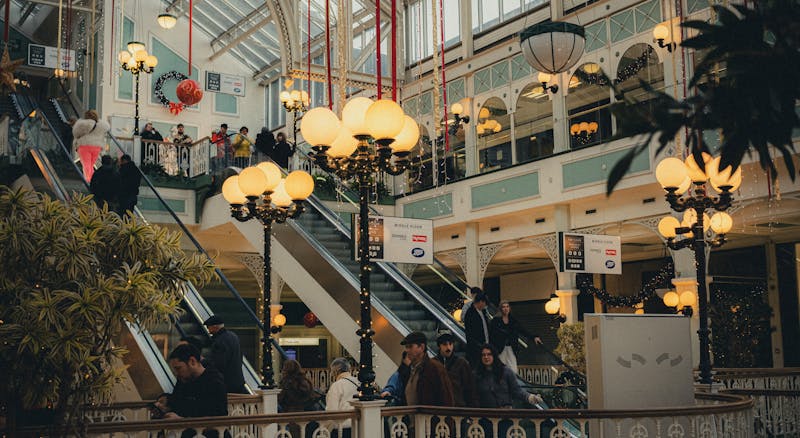


Evaluating an enclosed mall requires looking beyond occupancy and focusing on the metrics that reveal long-term performance. Factors like tenant sales, occupancy cost, foot traffic, sales per square foot, debt service coverage, and net operating income provide a clearer picture of a mall's health and future potential. Understanding these metrics helps investors separate strong opportunities from properties that only appear attractive on the surface.
Most mall deals don’t fall apart because of what you see, but because of what you overlook.
Every enclosed-mall deal comes with a pro forma, and most look compelling at first glance. The numbers are clean, the assumptions are polished, and the story holds together. For many new investors, this is where the evaluation of a retail real estate deal begins.
The challenge is that not all of those numbers carry equal weight. Some reveal how a property actually performs, while others simply support the narrative. Knowing how to read a mall’s financials separates a surface-level review from a real evaluation.
How Occupancy Cost Ratio Measures Tenant Affordability in Malls
The occupancy cost ratio is the total occupancy cost (base rent plus CAM, taxes, insurance, and marketing fund contributions) divided by the tenant’s gross sales. It’s one of the most telling metrics in an enclosed mall because it answers a simple question: Can your tenants afford to stay?
Think of it as rent, a percentage of your income. At a certain point, even a small increase becomes unsustainable. The same dynamic applies to tenants.
ICSC benchmarks put healthy occupancy cost ratios at 8 to 15 percent, depending on tenant category.
These ranges matter because they establish the baseline for what “healthy” looks like. From there, the next step is to understand how that baseline shifts across different tenant types.
Occupancy Cost Ratio Benchmarks by Tenant Type in Shopping Centers
Different tenant categories operate with different margins, so their tolerance for occupancy costs varies:
- Food and beverage: Under 10 percent is generally healthy. Once it exceeds 15 percent, margins tighten quickly, and operators begin to reconsider their location.
- Specialty apparel: Most perform well in the 10-14% range. When costs rise above 18 percent, renewals tend to become more difficult.
- Jewelry and accessories: These tenants can often sustain 15 to 20 percent due to higher margins, but performance still needs to justify the cost.
- Services (salons, medical, fitness): Typically under 12 percent. Sales per square foot may be lower, but these tenants tend to stay longer when costs are predictable.

These ranges reflect how different tenants operate. A restaurant operates on tighter margins than a jewelry store, so even small increases in occupancy costs can have an outsized impact.
In enclosed malls, shared space costs vary due to climate-controlled areas, escalators, elevators, and security, which increase CAM. Tenants might pay $3-$5 PSF in strip centers but $8-$15 PSF in malls.
Red flag: A pro forma showing rents increasing 3 percent annually without modeling sales growth. The occupancy cost ratio rises quietly, and within a few years, tenants may be under pressure.
Sales Per Square Foot Benchmarks for Mall Investors in Retail Real Estate
For Class B enclosed malls in tertiary markets, average in-line sales PSF generally range from $250 to $400, depending on tenant mix and trade area strength. Data from ICSC and Green Street support this.
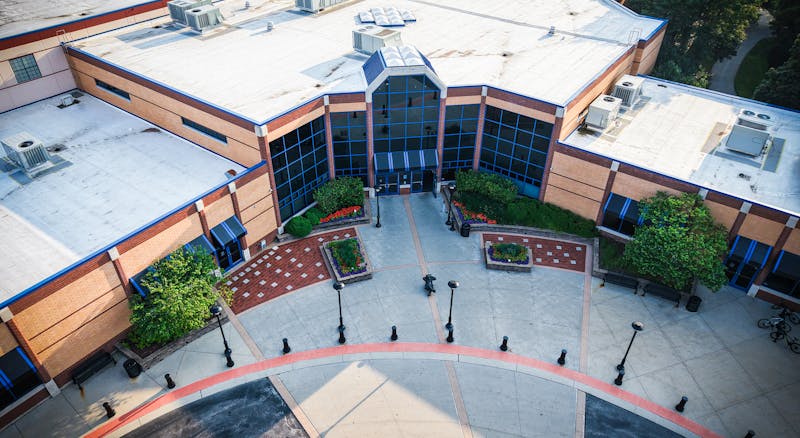
At Greenwood Mall in Bowling Green, Kentucky, in-line sales fall within this range. With 88.5% occupancy and a $54 PSF acquisition basis, the rent roll shows tenants generating sufficient volume to cover their occupancy costs.
How Sales Per Square Foot Impacts Mall Performance
You can think of sales PSF as the engine behind rent. If the occupancy cost ratio tells you how heavy the load is, sales PSF tells you how hard the engine is pulling it.
When tenant sales comfortably exceed their cost thresholds, the property has room to absorb changes. When sales are closer to breakeven, even a small disruption can put pressure on the tenant base.
Red flag: Sales PSF clustering near breakeven levels. If most tenants are at $250 PSF with $35 PSF in occupancy costs, there is very little cushion for a slowdown.
How Anchor and In-Line Rent Shapes Mall Lease Economics
Anchors pay much less rent than in-line tenants, usually $3-$8 PSF compared to $20-$45 PSF. This spread may seem counterintuitive.
That is because anchors function more like magnets than traditional tenants. They draw traffic to the property, which supports the smaller shops.
Without anchors, the in-line sales PSF can decrease by 15-25%, according to ICSC foot traffic data.
Anchor Tenant Risk and Lease Rollover in Mall Investments
The typical structure of an enclosed mall helps explain where the risk sits:
- Anchors typically occupy 50-60% of total GLA, making them the main physical presence.
- Despite that footprint, they often contribute only 15-25% of total base rent, shifting income reliance to smaller tenants.
That structure is expected. Lease timing deserves attention. If anchor leases are expiring within the next few years and the pro forma assumes renewal at current rates, risk increases.
Department store closures are real, and replacing a large anchor is rarely quick or cheap.
At Greenwood Mall, the plan depends on in-line tenant performance and anchors supporting traffic, not on anchor rent growth.
What Strong Tenant Retention Looks Like in Shopping Centers
A healthy enclosed mall retains 70 to 80% of tenants at lease expiration. When retention falls below 65%, it often signals underlying issues.
Retention matters more in malls than in strip centers because of the clustering effect. When several tenants leave the same corridor, foot traffic shifts, and performance can decline.
Vacancy can have a ripple effect. One dark storefront may not matter much, but several in the same area can change how customers move through the space.
Same-Store NOI Growth in Retail Real Estate: What to Expect
When reviewing projections, it’s worth paying close attention to how growth is modeled:
- Some pro forma statements show steady rent increases but do not account for downtime between leases, which can overstate income.
- Others assume nearly all tenants renew, even though turnover is a normal part of mall operations.
- Leasing costs, such as tenant improvements and free rent, are sometimes minimized or even excluded altogether.
A more grounded approach starts with trailing 12-month NOI and projects forward using conservative assumptions.
How Capital Expenditures Impact Enclosed Mall Performance
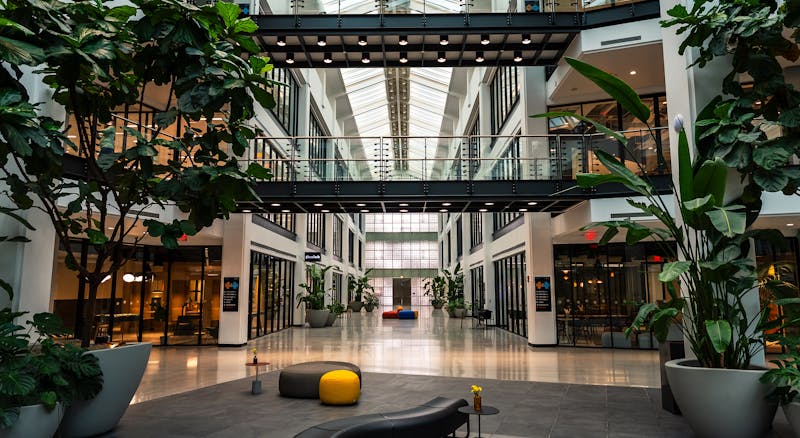
Enclosed malls are expensive to maintain. HVAC for 500,000+ SF of climate-controlled space. Parking. Roofing across massive footprints.
Common-area flooring, lighting, and escalators. BOMA and ICSC benchmarks recommend reserving 10-15% of NOI annually for capital expenditures.
For a mall generating $5 million in NOI, that's $500,000 to $750,000 per year. Larger projects, such as roof replacements or HVAC overhauls, run $2 to $5 million.
Red flag: A pro forma model projects $100,000 in annual capex for a 700,000 SF enclosed mall. That's $0.14 PSF. Either the sponsor doesn't understand the asset, or they're inflating distributable cash flow to raise funds.
At $54 PSF, Greenwood's low acquisition cost allows budgeting capex, enabling proper maintenance and attractive returns.
Common Mall Pro Forma Mistakes Every Investor Should Avoid
Even well-prepared pro forma statements can omit important details or rely on assumptions that don’t hold up over time. The numbers may look stable on the surface, but small gaps in their presentation can lead to very different outcomes in practice.
Before relying on any projections, look closely at a few areas where issues tend to show up:
Gross vs. Economic Occupancy
A mall reporting 90% occupancy on a gross basis can have significantly lower economic occupancy because of free rent periods, percentage-only leases, or tenants in default.
Always ask for economic occupancy: what percentage of contracted rent is actually collected?
Above-market Lease Roll
If 30% of GLA has leases expiring in the next 24 months at rents above current market rates, the "stable" income is likely to be repriced downward.
Deferred Maintenance
A mall that has deferred $3 million in maintenance looks profitable on paper. The roof doesn't hit the income statement until it leaks through the ceiling. Ask for the property condition assessment and match it to the capex budget.
Lease Rollover Concentration
We're comfortable with 10-15% of GLA rolling per year. Above 20% in a single year is a concentration risk. Above 25% is a potential crisis year, and the pro forma likely models it optimistically.

Why This Matters For Real Estate Investors
For new investors, it’s easy to rely on familiar metrics like cap rate and occupancy because they are simple and widely used. The challenge is that those numbers show only part of the picture, and in enclosed malls, they can be misleading if taken at face value.
The metrics highlight what drives performance: tenant health, lease structure, and capital needs. When aligned, income is stable; when not, even strong-looking properties can weaken.
In practical terms, this leads to better questions and better decisions. Instead of asking whether a deal looks good, you start asking whether it works.
How to Analyze Mall Financials as a Complete System
Metrics can’t be viewed in isolation. A mall with strong sales but low retention may lose top tenants, while one with high retention but rising costs may face pressure.
When we underwrote Greenwood, we considered the full picture, including tenant performance, lease structure, and capital needs. That broader view separates a surface-level review from a deeper understanding.
The goal is not to memorize metrics, but to recognize how they connect. Once you start seeing those relationships, the numbers begin to tell a clearer story about how a property is likely to perform.
In the next article, we’ll look at how to evaluate the people behind the deal and what a sponsor’s track record should actually tell you.
Topics: