
Essential drivers reveal whether a smaller market has durable demand beyond its population. Universities, hospitals, military bases, employers, tourism, youth sports, and regional trade pull can sustain retail traffic and tenant demand. Combined with disciplined underwriting, retailer interest, and a strong purchase basis, these factors help distinguish a resilient HomeTown market from one that is merely inexpensive.
Essential drivers may be the difference between a smaller market that only looks cheap and one with real demand hiding beneath the surface.
When we look at a HomeTown market, we are not simply asking whether the town feels pleasant or whether the main street looks active. Those details can matter, but they are not sufficient to support an investment thesis on their own.
We are asking what drives the community. Why do people live there, why do they stay, and why do they move there? What brings customers into the market from outside the city limits, and what gives the place more staying power than its population might suggest?
Those are the questions behind what we call essential drivers. In a smaller market, essential drivers matter because they explain the demand underlying the retail. They help us understand whether a town is simply small or functions as a regional center with more economic weight than the market label suggests.

Why Smaller Retail Markets Need Strong Demand Drivers
We are not interested in buying retail in a smaller market simply because it is cheaper. Prices can always get lower, and if a market has no demand drivers, no growth, no trade-area pull, and no real reason for retailers to care, a low price may just be the market telling you the truth.
We start with the reason: a HomeTown market may be supported by a university, a military base, a hospital district, tourism, a major employer, a manufacturing cluster, the energy sector, or a regional service, making the community more vital than its population.
How Quality Of Life Supports HomeTown Retail Demand
Sometimes, drivers include affordability and quality of life. People leave larger metros for more space, lower costs, better schools, safety, or a community where kids can grow differently. These preferences impact housing demand, school enrollment, healthcare, restaurants, youth sports, grocery traffic, and retail sales.
If the community has a real reason to exist and grow, the retail may have a stronger foundation than investors realize. That reason is the first clue that the market deserves a closer look.
What Essential Drivers Tell Us About A Community
Essential drivers help explain the “why” behind a market by giving us a clearer view of what supports customer traffic, tenant demand, and community resilience.
A smaller market with no clear driver may struggle to replace lost tenants, attract new retailers, or support reinvestment in older shopping centers. A HomeTown market with meaningful drivers may still carry risk, but it also has a stronger case for sustained retail demand.
That distinction matters because population alone rarely tells the full story. A spreadsheet may show a city's size, but essential drivers help explain the role that city plays in the lives of the people around it. The population number is the headline; the drivers are the story beneath.
How Universities, Military Bases, Hospitals, And Employers Support Retail Demand
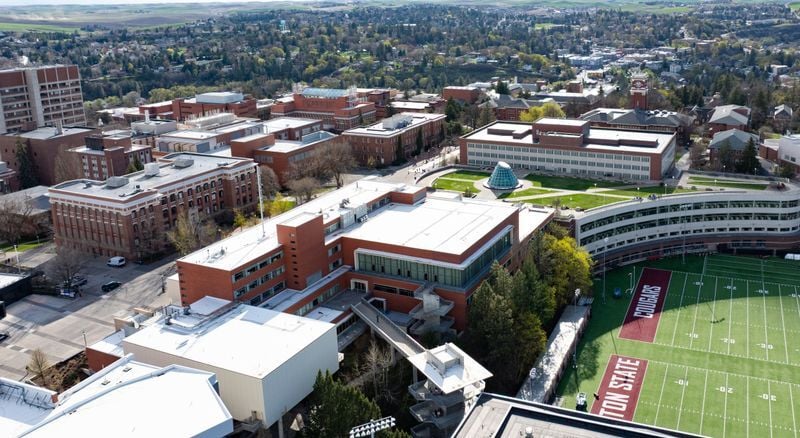
Some essential drivers are easy to see. A university can create a steady flow of students, faculty, visitors, events, and local spending, while also helping stabilize a town’s identity. A college town may not be a major metro, but it can have a deeper demand base than a casual investor assumes.
A military base benefits a community by bringing employment, families, contractors, population movement, and federal spending, supporting retail for households, young families, and daily needs.
A hospital district can transform a smaller city into a regional hub as people travel for care, employees commute, and medical systems provide steady jobs. A major employer also anchors income and traffic, with tourism, manufacturing, logistics, energy, agriculture, or regional government adding demand.
None of these drivers makes a market automatically attractive, and each one still has to be evaluated. What they provide is a starting point, because they help answer a simple but important question: why does this place matter?
Why Youth Sports Can Signal Retail Ultimatum In Smaller Markets
Not every essential driver is a university, base, or hospital. One of the more interesting demand drivers in smaller markets is youth sports, which may sound unusual if you only think about retail in terms of rent rolls and cap rates. Yet any parent who has spent a weekend at a tournament knows the pattern.
Youth sports attract families who stay in hotels, dine out, buy shoes, snacks, gear, gas, and last-minute items, creating repeat visits and retail traffic beyond the city population.
In some communities, sports complexes and tournament schedules create a meaningful demand pattern for restaurants, sporting goods, discount apparel, convenience retail, and service tenants. They can also reflect the community’s identity, because families invest time and money where they believe their kids can participate and belong.
Youth sports are a part of the demand picture, not the whole thesis. In the right HomeTown market, they can demonstrate that the community attracts people, rather than just serving as a pass-through location.
Why Trade-Area Pull Matters In HomeTown Retail Investing
Once we identify the drivers, the next question is whether they generate demand beyond the town itself. The best HomeTown retail markets typically draw from surrounding communities, not just from residents within the city limits.
Many investors err by stopping at population numbers. Instead, we analyze the trade-area pattern: Is the town a shopping hub for nearby communities? Does it have a dominant Walmart, grocery store, hospital, college, courthouse, mall, power center, or sports complex? Do retailers serve only local households or a broader area?
The better question is not whether the town sounds big enough. It is whether the market functions as the retail hub for a larger region.
What Retail Trade-Area Pull Helps Us Understand
Trade-area pull helps us assess whether demand is broader than the city population indicates. The most useful questions include:
- Where do people actually shop? Customer behavior matters more than a city boundary.
- Which retail anchors already draw traffic? Grocery stores, Walmart, hospitals, colleges, and regional centers can shape shopping patterns.
- Can customers get the same tenant mix nearby? If not, the market may serve a wider area.
- Are nearby communities dependent on this retail node? A smaller city can act as the commercial center for surrounding towns.
- What do traffic patterns and tenant reps suggest? Retailer interest can confirm what the map alone cannot show.
A market may look small on paper but function as the retail hub for a much larger area. If the center sits within that hub and the basis is right, the asset may be more durable than a surface-level market screen suggests.
How Essential Drivers Support A Retail Real Estate Exit Strategy
If trade-area pull helps explain current demand, essential drivers can also help explain future value. Investors often ask who will buy the asset later, and we ask that question too. The exit buyer usually needs to believe the income is durable, and essential drivers help explain why.
If a shopping center is backed by regional healthcare demand, a university, military base, tourism, or a limited competing trade area, then it's more than just "small market center for sale.” It becomes a specific retail asset serving a defined demand.
That is easier for a buyer to understand and for a lender as well. A clear demand base helps explain why the property matters, why tenants may want to be there, and why the income may have staying power.
Why Smaller Markets Still Require Disciplined Underwriting
None of this eliminates risk. Smaller markets still require discipline because tenant depth may be thinner, replacement demand may be more limited, and investors cannot ignore those risks.
Still, if we can explain why the community matters, why the center matters within that community, and why retailers want the market, there is something real to underwrite.
Why Essential Drivers Do Not Replace Investment Numbers
Essential drivers do not replace the numbers. They do not make a weak rent roll strong, fix a bad basis, excuse poor leasing, solve weak anchors, justify unrealistic debt, or erase capital needs that do not pencil.
The numbers still have to work, but the drivers help us assess whether those numbers have a solid foundation. That distinction is important because a deal can sound appealing in narrative form while still failing under financial pressure.
That is the difference between a story and a thesis. A story says the town feels good. A thesis states that the market has specific economic and social drivers, retailers are already validating demand, the asset serves a real trade area, the basis leaves room to operate, and the return path does not depend on fantasy.
That is what we are looking for.
What Our Team Looks For In A HomeTown Market
When we evaluate a HomeTown retail market, our goal is to understand what would make the town resilient. If one tenant leaves, is there a reason another tenant would care? If capital markets tighten, does the property still generate cash flow? If a lender asks why this market matters, can we answer without waving our hands?
Those questions are practical because HomeTown retail is not about sentimentality. It is about assessing a community's economic structure before the capital markets fully price it.
Essential drivers help make that structure visible. They show whether we are looking at a small market for a reason or a HomeTown market that is stronger than the spreadsheet summary suggests.
Why This Matters For Real Estate Investors
For new investors, essential drivers are a useful way to avoid judging smaller markets too quickly. A population figure may tell investors how many people live within the city limits, but it does not explain why people come to the market, why retailers care, or why a shopping center may matter to the region.
This matters because retail real estate is not only about the property itself. It is also about the demand system surrounding the property. A center supported by healthcare, education, tourism, employment, youth sports, regional services, or trade-area pull may have more staying power than the market label suggests.
Essential drivers don't guarantee a good deal but help investors ask better questions. When aligned with retailer demand, disciplined basis, and realistic returns, a HomeTown retail market deserves closer examination.
How To Evaluate Essential Drivers Before Investing
The right question is not whether a smaller market seems charming, familiar, or inexpensive. The better question is whether the community has a genuine reason to sustain durable retail demand.
Those questions help distinguish a hopeful story from a real thesis. HomeTown retail works best when the community’s drivers, tenant demand, asset quality, and purchase basis all align.
Essential drivers help identify which markets merit serious study, which to pass over, and where demand may be stronger than the spreadsheet summary suggests.
Topics: