
This episode is also available on platforms like Spotify and Apple Podcasts.
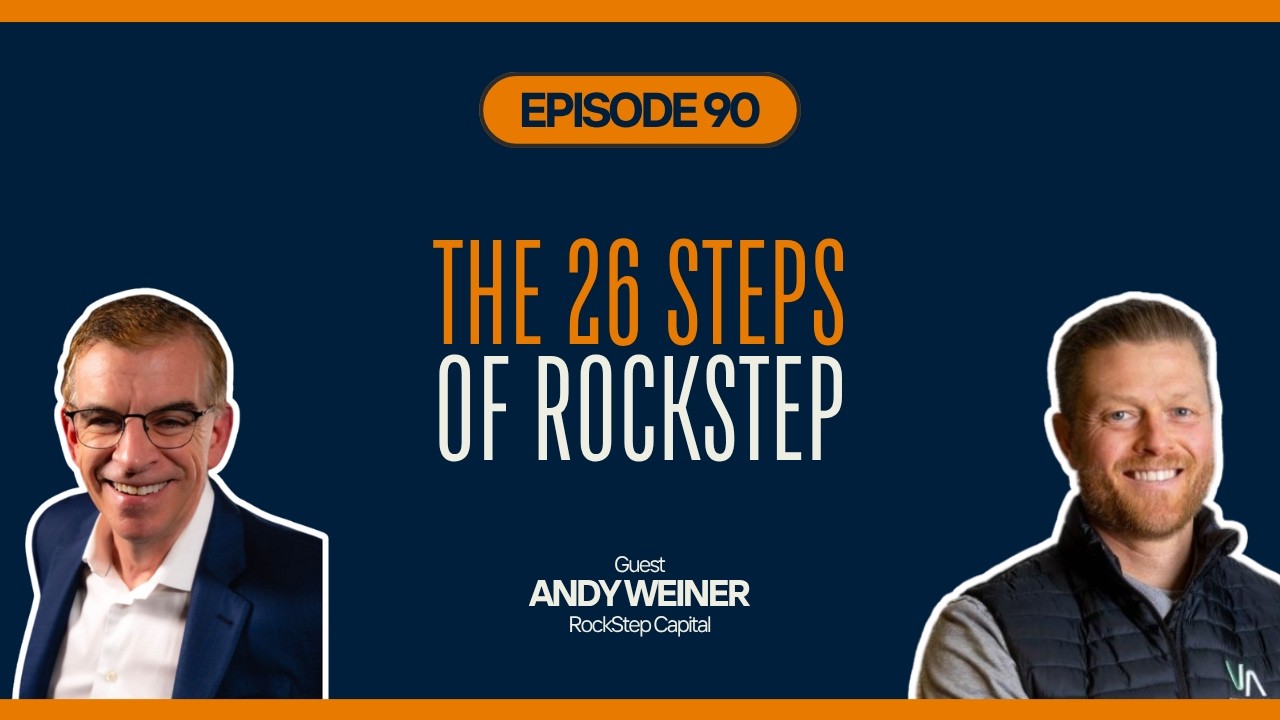
In a recent episode of the Capitalist Culture podcast, Rockstep Capital President Andy Weiner joined host Kip Knippel to share the story of how his family’s retail downfall paved the way for a disciplined and community-driven real estate investment firm.
From running operations for 159 stores to launching Rockstep Capital in 1997, Weiner’s journey is marked by hard-earned lessons in inventory mismanagement, capital preservation, and company culture. But at the heart of it is a single truth:
“You can’t live without consequences,” Weiner said. “If you’re not operating like A++, you can’t survive against Walmart. Maybe not even if you are.”
Learning from Loss: The Retail Lessons That Shaped a Real Estate Vision
Weiner’s retail background runs deep. His grandfather founded Wieners Stores in 1926, which grew to become a 159-location chain across Texas and Louisiana, offering budget-friendly fashion in both urban centers and small towns. But the company couldn’t keep up with the competition or its own internal challenges.
“We did a Chapter 29,” Weiner joked. “Two Chapter 11s and a Chapter 7. We had weak inventory management. My uncle loved to buy but didn’t clear goods at the end of the season. We’d store last year’s dresses in body bags and bring them back out six months later. The customer knew. She’s smart.”
“Because we weren’t marking down merchandise, our profits were overstated, and we paid taxes on income that didn’t exist. Eventually, we had a cash run. We got squeezed by Walmart, department stores, off-pricers, you name it.”
The experience left a mark, teaching Weiner the dangers of poor governance and the need for operational discipline. Those lessons would go on to define Rockstep Capital's ethos.
A Pivot Toward Community: Finding Opportunity in Hometown America
Weiner launched Rockstep Capital in 1997 with an initial focus on developing Supercenter-anchored retail centers. Ironically, Walmart, the company that had helped end his family’s business, became his first real estate client.
“They were tough negotiators, but honorable. I knew them well, and I knew how to think like a tenant. That was a real advantage.”
The firm’s strategic direction changed when a development deal for Tractor Supply in a small Texas town revealed something powerful: HomeTowns offered better alignment, less friction, and stronger long-term upside.
“That one deal took me from big cities to small towns. And what I found in those towns was a completely different business environment. People want you to win. They’re collaborative. And the cost structure, risk profile, and alignment just made more sense.”
Defining the Hometown Strategy
Rockstep now focuses on what Weiner calls Hometown America: markets with fewer than one million residents (typically between 100,000 and 500,000) that have clear drivers of population and job growth.
“We want low crime, good schools, and something fueling demand: a university, a military base, a Fortune 1000 company that’s hiring, a hospital district. These towns offer stability and affordability, and they’re often overlooked.”
The firm targets open-air grocery-anchored centers, power centers, and distressed enclosed malls. These are high-cash-flow assets that often trade at cap rates well above those in primary markets.
Local Equity: Reducing Risk Through Partnership
One of the most distinctive aspects of Rockstep’s model is its commitment to local partnerships. That approach began in 2009 during a project in Vicksburg, Mississippi, where Weiner invited local business leaders to invest alongside him.
“It was a lightbulb moment. These people brought insights, connections, access to lenders. Sometimes they sit on the bank boards. They made everything easier: zoning, entitlements, leasing, even rumor control.”
Since then, Rockstep has replicated the local-partner model 16 times, combining national experience with hometown insight and alignment.
Culture That Performs: Living the Rocksteps
At the heart of Rockstep’s organizational DNA is a cultural framework called the Rocksteps: 26 behavioral principles that govern how the company operates, hires, and makes decisions.
“They’re not values on a wall. They’re detailed, sentence-by-sentence behaviors. And we live them.”
Every Monday, the company holds a call where an employee leads a discussion on one Rockstep, reflecting on how it applies to life and work. It’s a ritual that builds alignment and accountability across a distributed team.
“To get hired, you have to pick your three favorite Rocksteps and the three you struggle with most. We talk about it in the interview. And if you can’t live the Rocksteps, you don’t stay.”
Weiner’s personal favorites include "Do the right thing, always," "Keep family first," and "Be punctual." The hardest? "Be responsive," "Listen generously," and "Keep things fun."
“My wife says I take the fun out of fun,” he laughed. “She’s not wrong. I’m serious by nature. But I’m working on it.”
Scaling with Intention: Launching the Hometown America Fund
As Rockstep scaled, the need to acquire distressed mall assets quickly led to the launch of the Hometown America Fund. Deal timelines shrank from months to weeks, and sellers required proof of capital before signing.
“You can’t syndicate fast enough to compete. You need committed capital. The fund lets us move quickly, and that gives us a big advantage.”
With the fund, Rockstep can act on short-window opportunities, often competing with only a few other buyers in markets most institutional players ignore.
Education as Strategy: Demystifying Retail for Investors
To support its capital-raising efforts, Rockstep has invested in becoming a trusted source of shopping center education. The firm has published over 150 articles and launched a YouTube series called The Shopping Center Channel.
“Most investors understand multifamily. Very few understand retail. We want to change that.”
Weiner also shares insights on Instagram as @shoppingcenterguy, giving investors a behind-the-scenes look at Rockstep’s strategy and deals.

What Real Estate Investors Should Know
Weiner believes that real estate is essential for long-term wealth building, especially in inflationary environments. But investors need to understand the tradeoffs.
“Liquidity is the biggest blind spot. If you need your money next quarter, don’t invest in real estate. But if you can stay in for five to seven years, the rewards (especially tax-wise), are enormous.”
He points to benefits such as bonus depreciation and cost segregation, which can generate substantial passive losses to offset income.
“You invest a million dollars, you might get a $700,000 passive loss in year one. That’s real tax efficiency.”
Redefining Success: Stability, Culture, and Legacy
For Weiner, success isn’t just measured in IRRs or exits. It’s about people, place, and purpose.
“We’ve gone into vulnerable communities, stabilized assets, created careers, and lived by the Rocksteps. That’s the legacy I want. And I think it’s just the beginning.”
Topics: