
Note: Listen to the full episode on platforms like Spotify and Apple Podcasts.
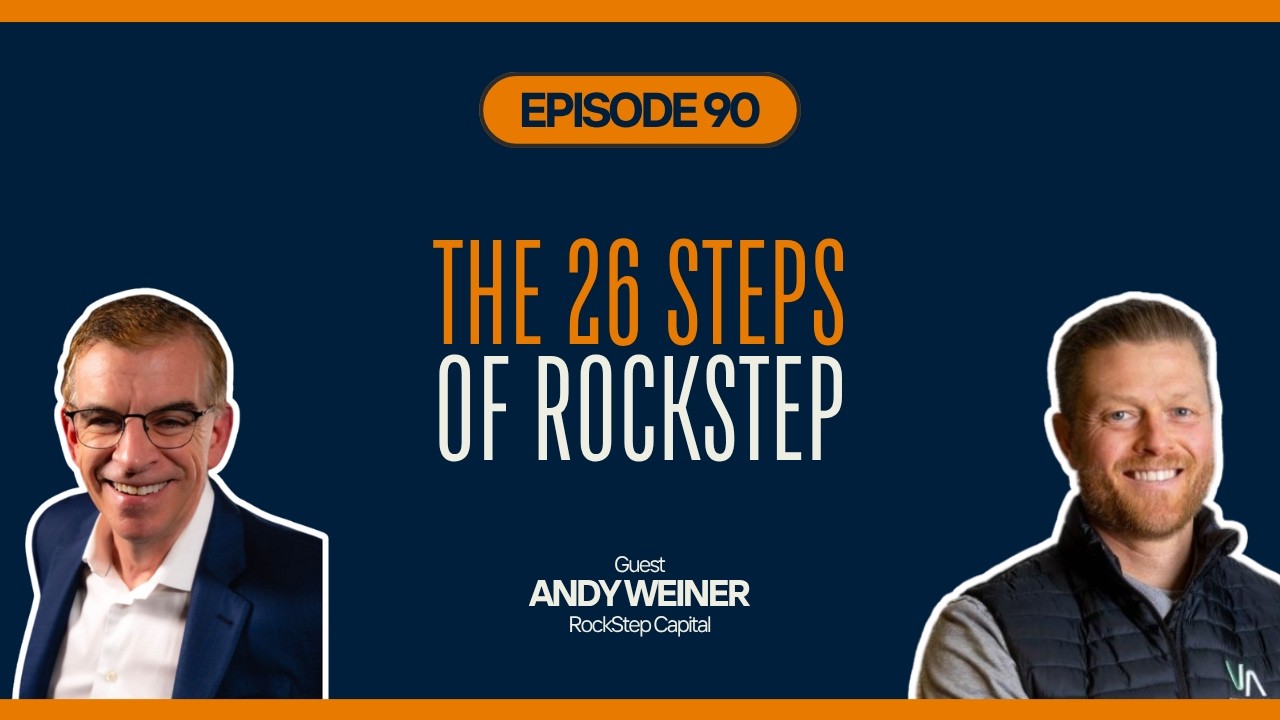
In a recent episode of the Tools, Talents & Techniques podcast, Andy joined host Dustin Sutton for a wide-ranging conversation on shopping center investing, company culture, leadership systems, and the evolution of retail real estate.
From the company's behavioral framework and operating cadence to the lessons learned from decades in retail, the conversation highlighted how culture, discipline, and adaptability influence both business operations and investment decisions.
Why Retail Real Estate Is Outperforming Other Commercial Real Estate Sectors
One of the first topics Sutton raised was the state of retail real estate. According to Weiner, many investors still view the sector through an outdated lens shaped by Amazon's rise and the disruptions of the past decade.
“Retail today is different than it was three or four years ago. Retail was out of fashion until about three or four years ago, but today it's in fashion for two reasons.
Amazon killed the weak retail players. Amazon and COVID were the final knife in the heart. But those that survived have their own e-commerce strategy and they're very effectively able to compete against Amazon and hold, if not grow, market share against Amazon. There are dozens of companies that survived the Amazon effect and are still growing: TJ Maxx, Aldi, Five Below, Burlington, Ross, just to name a few.”
At the same time, retail benefits from a supply dynamic that doesn't exist in many other sectors of commercial real estate.
“There's no new shopping centers. None are being built. Construction costs went up by 40%, and there's no new inventory coming on the market. So all these companies are expanding into an inventory that's not expanding. As a result, it's favorable supply demand dynamics.
If you own an existing shopping center, you have a lot of positive pressure to replace weaker tenants with tenants that will pay more rent.”
Those market dynamics help explain why RockStep remains focused on retail today. But Andy's conviction in the sector comes from a much deeper source: decades spent inside the retail business itself.

Why Retail Real Estate Has Become a Strong Cash Flow Investment
For Andy, the appeal of retail is not limited only to the impressive amount of tenant demand. Another powerful factor is the income that retail produces.
“Retail has got positive leverage. What that means is that the cap rate, the yield at which you buy a property, is higher than the interest on the debt that you put in your property.
We bought a grocery anchored center at a 9% yield and our debt was at 7%. So by putting debt on the property, you increase the cash flowing to your equity.
He contrasted that with sectors facing negative leverage.
“Multifamily was valued at four-and-a-half or five cap, but your debt is at five-and-a-half or six percent. It's upside down. Negative leverage is bad. Positive leverage is good.”
For investors seeking income-producing assets, Weiner believes shopping centers currently offer one of the strongest combinations of yield and long-term fundamentals in commercial real estate.
How Andy Weiner's Retail Background Shaped RockStep Capital
Weiner's understanding of retail was formed long before RockStep Capital existed.
“My grandfather started a clothing store near downtown Houston and it ended up becoming a chain of over 150 clothing stores. I grew up in the business. I ran the operations of the company. I ran the stores. I ran real estate, HR, systems, logistics, and finance.
I learned about retail. I learned how retail thinks, how inventory works, pricing strategies, location strategy, store metrics, and competitive environments. I'm a student of all that.”
That experience gave him a deep understanding of retailers and shopping centers alike.
“I started my company in 1997 and started investing in shopping center real estate because I understood shopping centers. I understood leasing. I understood location strategy. And I've developed that business over the last 30 plus years.”
That retail background eventually shaped not just the company's investment strategy, but even the name and language RockStep uses internally.
The RockStep Philosophy Behind Adaptability and Long-Term Growth
The company's name reflects a philosophy that continues to guide RockStep today.
“The word rockstep is a dance move. I like big band music. I like swing music. When you dance swing or ballroom dance, you rock step when you switch directions. We use it as a metaphor to be responsive, to be agile, to be nimble, to listen to the music in the industry. If we've got a problem, we need to rockstep. If there's a great opportunity, let's rockstep.”
Over time, the concept evolved into much more than a company name.
“Everybody in our company knows what that word means and they use it all the time.”
The idea of RockStepping became more than a metaphor for market adaptation. It became the foundation for RockStep's definition of behavior.
How the RockSteps Framework Builds a High-Performance Company Culture
One of the most distinctive aspects of RockStep Capital is its 26 RockSteps, detailed behavioral expectations written personally by Weiner.
“I wrote 26 very detailed rules of behavior for everybody in our company, and they're required to follow all 26 rules. Every week we have a RockStep of the Week. Every Monday at 10 o'clock, everybody gets on a Zoom call and we talk about it. We've done this for 10 years. Twice a year, we go through all 26 RockSteps.”
The RockSteps influence hiring, accountability, leadership, and communication throughout the company.
“If you're going to interview at RockStep, you're going to have to study the RockSteps and tell us your favorite three and your most challenging three. We're required to live by these RockSteps with our investors, tenants, our communities, our professionals, our lenders, and we can be held accountable.”
While the RockSteps define how people behave, RockStep also relies on a formal operating system to keep execution disciplined.
How EOS Helps RockStep Capital Drive Accountability and Growth
Three years ago, RockStep adopted EOS, the Entrepreneurial Operating System.
“Every team in the company sets quarterly goals. We call them Rocks. These are the five to seven things that each team and each individual can do over the next 90 days that can have the biggest impact on the company.
The goal is straightforward.
“Every single person in the company every week is working on the most important things for that person and the company. You create traction and you create growth.”
That combination of culture and operating discipline supports RockStep's broader investment strategy, especially its focus on hometown markets.
Why RockStep Capital Focuses On HomeTown Communities
RockStep concentrates on what it calls HomeTown markets, communities that are often overlooked by larger institutional investors but possess the fundamentals necessary for long-term growth.
“We've identified about 100 HomeTowns in the United States. These are markets under a million people, over 100,000 people, with low cost of living, great quality of life, low crime, and some essential driver of growth. These "essential drivers" could be a university, military base, tourism, a growing hospital district, or a Fortune 1000 company.”
Weiner believes demographic trends continue to support these communities as families seek affordability and quality of life outside major metropolitan areas.
“You're seeing families move into HomeTowns that have a great quality of life and they can get two to three times the size of a home for less than what it would be in a big city.
Those are the markets that we like to invest in.”
The HomeTown strategy was not developed in a boardroom. It emerged from one of the most challenging periods in Weiner's career.
How the Great Financial Crisis Shaped RockStep's Investment Strategy
One of the more distinctive aspects of the conversation was how RockStep's current investment model emerged from the aftermath of the Great Financial Crisis.
“The biggest challenge was the Great Financial Crash (GFC) of 2008. We were growing by building Tractor Supply stores in small-town America. When the GFC came, we had to learn how to raise equity from family offices and private investors. I never raised equity before. I was a shopping center guy.”
What initially appeared to be a setback ultimately became a competitive advantage.
“We got local business leaders in Vicksburg, Mississippi, to be part of the equity. We got a local community bank to be our lender. We liked the fact that local input can help reduce risk and improve returns. We've replicated that model everywhere around the country when we buy enclosed malls.”
The experience reinforced Andy's belief that local knowledge often creates better investment outcomes than distant decision-making.
That lesson also contributed to another major priority for the company: investor education.
Why Investor Education Is Essential for Shopping Center Investing
Education has become an increasingly important part of RockStep's mission as the company seeks to help investors better understand the shopping center sector.
“Our goal is to be the country's leading educator for investing in shopping centers.
Combining our YouTube channel and Learning Center, we've got over 200 articles on every aspect of shopping centers and over 75 videos about every aspect of investing in shopping center real estate. At the end of the day, we want people who don't understand retail and shopping centers to be educated.”
According to Andy, many investors understand multifamily, office, or industrial real estate, but far fewer understand the operational and economic drivers behind successful shopping centers.
By helping investors understand how retail real estate works, RockStep aims to drive more informed investment decisions and broader awareness of the opportunities available in the sector.
Why Boring Cash Flow Beats Flashy Real Estate Deals
Taken together, the conversation returned repeatedly to a simple theme that runs throughout RockStep's culture, investment philosophy, and operating strategy: disciplined execution creates long-term results.
“Real estate has great tax advantages. There are cash-flow advantages. But one of the disadvantages is a lack of liquidity. Investors need to understand that tradeoff.”
For Andy, successful investing is not about chasing trends or pursuing the newest asset class.
“We do not like sexy properties at RockStep. We like boring properties. We like boring cash flow. That's it.”
That philosophy may not generate headlines, but it has guided RockStep for nearly three decades.
Whether discussing retail fundamentals, company culture, investor education, or hometown investing, Weiner consistently returned to the same idea: focus on fundamentals, stay adaptable, and build systems that allow good decisions to compound over time.
For RockStep, that means finding durable properties, generating reliable cash flow, investing alongside local communities, and remaining ready to RockStep whenever the market presents a new challenge or opportunity.
Topics: