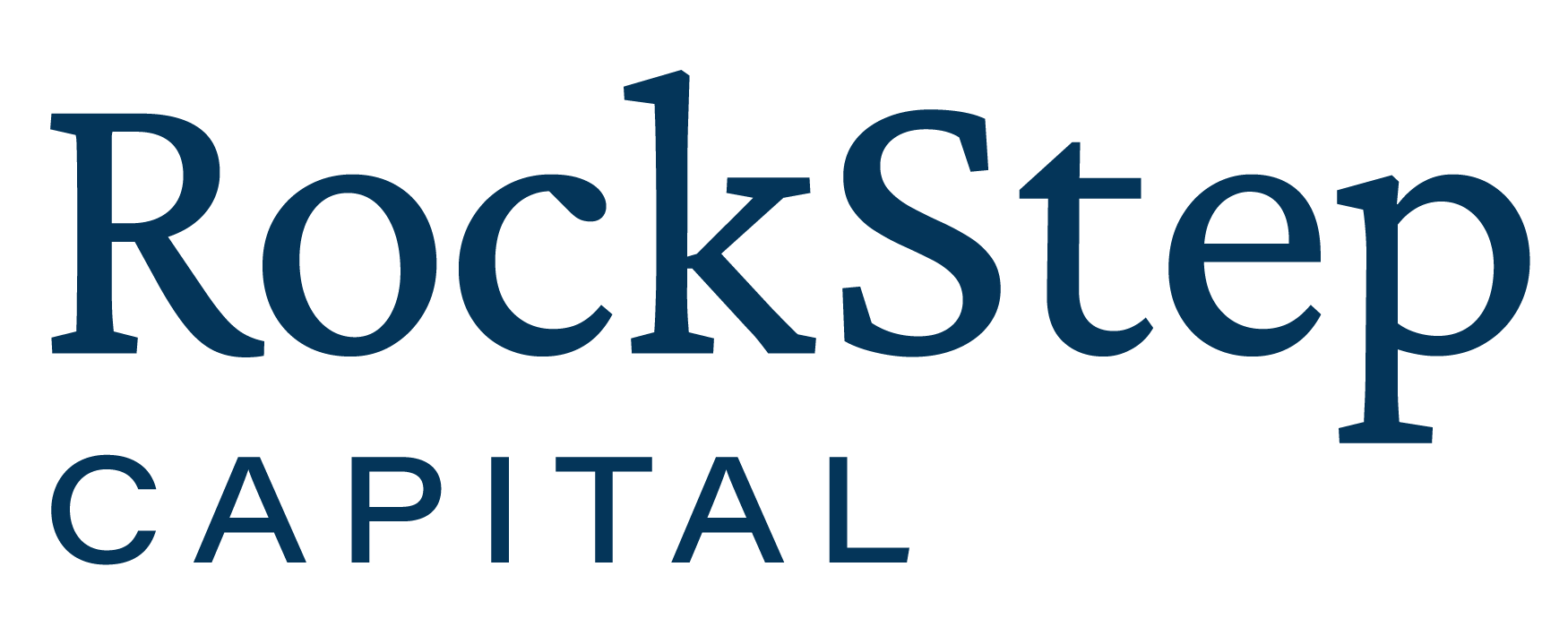

Watch this video before our call
I'm looking forward to meeting with you.
Before we meet, please set aside 15 minutes or so to watch the above video. During the video, I cover investors' most frequently asked questions about RockStep and our strategy.
By watching the video ahead of time, it will ensure that we can make the most productive use of our time together.
If you are unable to watch the video before our call, please click the link in the appointment and choose a time to reschedule for a later date.
Here are some of the things we will discuss during our call:
- Your background
- Your investment experience
- Your investment goals
- Your risk tolerance
I'll answer any questions you may have about myself and RockStep, and we'll figure out the next steps, if any.
The typical next step for most investors after the discovery call is conducting due diligence. If it seems like we might be a mutually good fit for one another, we will provide you with access to our secure data room, which contains all of the relevant information you'll need to make a prudent investment decision.
We understand that the first step of the process is to earn your trust, and that doesn't happen overnight. We want to ensure that everyone who partners with us does so with confidence!
Talk to you soon!
Andy
Frequently Asked Questions
What information is available in the Secure Data Room?
Below is a list of information in the Secure Data Room:
- Background check on Andy Weiner
- Principal Questionnaire for Andy Weiner
- Due Diligence Questionnaire for the Fund
- RockStep Capital Org Chart
- Fund Offering Documents
- Executive Summary
- Investment Presentation
- Webinar Replay
- PPM
- LLC Agreement
- Subscription Agreement
- SEC Form D filing
- Historical Track Record
- Past and Current Deal Information
- Business Plans / Investment Summaries
- Closing Statements
- Investor Letters and Financial Statements
How do I qualify as an Accredited Investor?
-
Income: Individuals must have earned more than $200,000 in each of the past two years, or more than $300,000 with a spouse or domestic partner, and have a reasonable expectation of the same income in the current year.
-
Net worth: Individuals must have a net worth of more than $1 million, either individually or jointly with a spouse or domestic partner, excluding the value of their primary residence.
-
Professional knowledge: Individuals may also qualify based on their professional knowledge, experience, or certifications. For example, financial professionals with Series 7, 65, or 82 licenses are considered accredited investors. The certification must come from an accredited educational institution or self-regulatory organization, and demonstrate the individual's understanding of securities and investing.
How do I verify my Accredited Investor status?
There are a couple of ways to verify your "accredited" status.
The simplest way is to have your CPA, attorney, or financial advisor complete a form letter that attests that you meet the requirements of an Accredited Investor.
If you are unable to have one of those professionals provide you with the attestation letter, you can provide tax returns and W-2s that demonstrate that you meet the "income" requirement, or you can provide brokerage statements and other related documentation that demonstrate you have a suitable amount of assets to meet the standard.
Our team will work with you through the process either way.
When do I need to wire in my funds?
We will have a separate closing each time we acquire a property. Ahead of the closing date, we will email capital call notices. You will have ten (10) business days to wire your funds in.
The capital call notice will contain the exact date to wire your funds, the amount to send, and where to wire the funds.
We will call capital in on a first-come, first-served basis. The order is determined by the date that investors signed their subscription documents.
We intend to call in the total amount that each investor has committed. For instance, if you committed $500,000 and we technically only needed $250,000 to close on the acquisition of a property, we would still call the total amount rather than a portion.
If I committed capital today, when do you plan on calling the capital?
We are targeting the acquisition of our first property in early 2025. If you were to commit today, we will let you know once we have a property under contract, along with the approximate closing date. You will then receive the capital call notice, which will provide you with the details.
How does the class "bump" work?
To reward early investors of the Fund, we are offering investors that commit within the first $5M of capital commitments to receive one Class of Units higher than they would normally.
Investors committing between $100,000 and $999,999 will receive Class B Units instead of Class A Units. This means you'll receive an 8.5% Preferred Return and a 75/25 split instead of 8.0% and 70/30.
Investors committing between $1,000,000 and $4,999,999 will receive Class C Units instead of Class B Units. This means you'll receive a 9.0% Preferred Return and an 80/20 split instead of 8.5% and 75/25.
How do I access the investor portal to make my capital commitment?
If you are ready to proceed, you can go to https://rockstep.verivest.com to sign up and make your capital commitment.
Once you've registered and made your capital commitment, you can electronically sign the subscription documents and complete your accreditation verification through the investor portal.
What is the investment minimum?
$100,000
How long will the Fund be open for investment?
We anticipate it will take approximately 18 to 24 months to raise the entire $50,000,000.
We will bring new capital into the Fund each time we acquire a new property. We are targeting acquiring eight properties in the Fund, which means we will have a closing about every three months.
Can I request my money back?
No. Our Fund is a closed-end fund. Once you invest, your money will be tied up until all of the assets have been sold.
We anticipate it will take six to seven years from the date of the first property we acquire until the date the final asset is sold to wind up the Fund completely.
Along the way, you will receive quarterly distributions of the operating cash flow generated by the properties. When a property is sold, the sale proceeds will pay down your contributed capital until you've received a total return of capital.
How frequently will you send out distribution payments?
Quarterly
Will you pay out the full amount of the Preferred Return each quarter?
Yes. The plan is to pay out the entire accrued Preferred Return each quarter. Any additional amounts above and beyond the accrued Preferred Return will be categorized as a return of capital.
When will you start making the quarterly distributions?
We will begin making distribution payments the quarter after acquiring the first property and continue to do so until all of the assets have been sold.
How will you be compensated if I invest?
As the Manager of the Fund, we are compensated in several ways.
- Acquisition Fee: 1.5% of purchase price
- Disposition Fee: 0.75% of sales price
- Fund Management Fee: 1.5% of capital contributions
- Promote / Carried Interest: 20% (Class C), 25% (Class B), 30% (Class A) after returning all investor capital
Since we are a vertically integrated firm, we charge a property management fee, leasing commissions, and construction management fees.
Will I have exposure to all of the properties the Fund purchases?
Yes. Whether you participate in the first closing of the Fund or the last closing, you will have an indirect ownership interest in all of the properties the Fund acquires.
We will order an independent appraisal of each of the Fund's properties each time we close on a new property. Based on the results of those valuations, the price of a Unit of any given Class (A, B, C) will be adjusted accordingly.
For instance, those participating in the first closing will purchase Units at $1,000 per Unit. If the property acquired in the first closing appreciates in value prior to the second closing, the Unit Prices will be adjusted upward. This ensures that early investors aren't being diluted by investors participating in a later closing.
How do you source your deals?
Most of the shopping mall deals in our pipeline are being offered for sale by lenders who have foreclosed on a property due to the previous owner's default. The most common situation that led to the foreclosure was that the current net operating income generated by the property wasn't sufficient to pay the principal and interest payments due to the lender.
When lenders go to sell the properties after they've foreclosed on them, they use a bid process that typically lasts between three to four weeks. They usually choose the highest bid from a group with the highest certainty of closing quickly (e.g., cash buyers).
Historically, we have syndicated the equity needed to acquire a property, as sellers were willing to give us ample time to raise the equity needed to close. Due to the fact that now the best deals available in the market are being offered by lenders we have had to shift from syndicating equity on a deal-by-deal basis to raising equity into a committed capital fund structure to compete with the larger, deeper pocket buyers.
What kind of properties do you plan on acquiring in the Fund?
Given that owning and operating enclosed shopping malls in secondary and tertiary markets is our specialty and currently represents the most significant opportunity in the retail sector, we plan on acquiring the three to five best shopping mall deals we find during the Fund's investment period.
We also see ample opportunities to acquire open-air power centers, which are properties that primarily contain large big-box retailers (anchors) such as T.J. Maxx, Hobby Lobby, and Ross Dress for Less. These properties are lower on the risk spectrum than an enclosed shopping mall but still tend to generate levered cash flows in the low double digits. We plan to acquire anywhere from one to three of these types of properties in the Fund.
We may also acquire one or two neighborhood shopping centers. These may or may not be grocery-anchored.
Where will the properties be located?
We plan to acquire properties in fly-over states or what many would consider "red" states. We might buy properties in "red" counties in "blue" or "purple" states.
When buying shopping malls, we want to target markets with one or more of the following:
- Large University
- Military/Government Presence
- Major Hospital Network
- Tourism
- Fortune 1000 company
The other criteria for being considered a HomeTown market are as follows:
- 100k to 1M population
- Exhibits community pride
- Engaged city leadership
- High quality of life
- Highly rated school system
- Low crime rates
- Growing population
- Low cost of living
Power centers or neighborhood shopping centers may be located in either a "HomeTown" market or a larger metropolitan market.
Are there currently any properties in the Fund?
As of December 7th, 2024, we have yet to acquire any properties in the Fund. We began fundraising at the end of June 2024 and plan to complete our first acquisition in early 2025.
How do you determine whether a deal is good or not?
here are three primary things we look at when a new deal crosses our desk.
- Can we acquire it for well below replacement cost?
- Are the existing tenants profitable at their current lease rates?
- Is the property currently generating free cash flow?
If it meets these criteria, it tells us that the property more than likely isn't distressed even though the current ownership structure may be (e.g., too much debt, not enough cash flow).
From there, we will determine whether or not the property is capable of generating a levered annualized internal rate of return of at least 15% in the case of a shopping mall or a 10% return in the case of a power center or neighborhood center with little to no changes in occupancy and expenses.
We consider ourselves true "conservative underwriters." We identify all of the potential opportunities to generate outsized returns, but we underwrite the deal as if NONE of them will actually come to fruition. If the deal still meets our criteria, we will proceed with a full underwriting of the opportunity.
Aren't shopping malls dying? Why is now the right time to buy them?
here are approximately 1,150 shopping malls currently in operation across the United States.
The short answer is that a good number of them would be better off being repurposed for a higher and better use. The ones that fit that criteria are usually located in larger metropolitan areas, where they face stiff competition with other shopping malls that are better located and preferred by consumers.
To be successful, most shopping malls today require a reimagining of the space. To fit the current environment, they need to shrink a large amount of the pure "retail" space to alternative uses.
Due to high construction costs, very little new retail development is taking place. The exterior facing space of a shopping mall is still very valuable real estate for the fastest-growing and best-capitalized retailers such as T.J. Maxx, Five Below, Ross Dress for Less, Burlington, Ulta, Sephora, and many others.
The Amazon Effect ended up putting many brick-and-mortar retailers out of business. In the process, they also drove up the cost of acquiring new customers online. Many of the retailers that were operating strictly online (aka Pure Play Retailers), have shifted to what we call an omni-channel strategy where they operate both online and through physical locations. They've found that the cost of acquiring new customers through their physical locations is more cost-effective and are therefore looking to expand, but space is challenging to come by due to the dearth of new development.
This is why we are bullish on acquiring shopping malls in HomeTown markets. There is less competition, communities desperately want their malls to thrive once again, and fast-growing retailers want to expand.
The primary impediment to that happening is existing owners, with an overinflated basis, having to lose their properties to foreclosure so that a new owner can come in, with a right-sized basis, and reposition the property to meet the current dynamics of the retailing environment.
Real estate, in general, is a cyclical business. Like most neighborhoods gentrify over time, the same thing occurs in retail. Sometimes, it makes sense to bulldoze an entire neighborhood of homes to make way for a new entertainment district, but most of the time, renovating the existing homes for a new generation of homeowners makes more sense. It isn't a binary decision; it depends upon the context of the situation.
How do you add value to the properties after you acquire them?
We "add value" to the properties we acquire in a handful of ways. Each property we own and operate has its own unique set of circumstances.
- De-Mall: This is when we repurpose much of the square footage for alternative uses. The mall's exterior will be transformed, with tenants having their own external entrances. The interior space may be used as office space or other mixed uses.
- Sum of the parts is greater than the whole: We sub-divide the various parts of the property and sell them off. For example, out-parcels may be sold to Chick-fil-a or Starbucks. A department store may be sold to a hotel or multifamily developer. You're left with a smaller retail footprint which is typically now better sized to meet the current market demand.
- Re-tenant: Sometimes, it makes more sense to replace a department store tenant with multiple tenants who are willing to pay a higher price per foot. Other times you can recruit new tenants that will drive greater foot traffic which allows you to steadily increase rents to new tenants.
- Mark to Market Rents: Tenants may be paying lease rates below market rates. Increasing their rent at renewal can increase the property's overall NOI.
- Expense Reduction: The former owners may have been spending more on operating expenses than they should have been. Reducing or rightsizing those expenses all hits the bottom line.
- Negotiating Tax Incentives: Given that many local communities want to see their properties revitalized, they are open to assessing an additional sales tax on sales coming from the property that is then passed along to the property owner to encourage them to continue to invest in the property.
- Receiving Consents from Large Tenants: Most anchor tenants of a retail property have negotiated rights in their lease to approve or disapprove any change in the overall property's use. Getting them to agree to your plans is both art and science and something we've mastered over the years, primarily through building strong relationships with the powers that be. Once those consents are received, a property owner can unlock the latent value of a property.
These are just a handful of ways that we add value. The key is fostering and maintaining excellent relationships with community leaders and the large national tenants since most value creation occurs by getting buy-in from these key stakeholders.
Who will buy the properties from you once you stabilize them?
For power and neighborhood centers, there is a large group of private and institutional investors who seek these assets in all types of markets.
For enclosed malls, the buying pool is smaller and depends upon RockStep's ability to maintain stable, if not increasing, cash flow. If we are able to achieve our objectives, the buying pool will increase because the targeted exit cap rate will be dramatically higher than a buyer could achieve with other stabilized commercial real estate assets.
How are you able to buy these properties at such great prices?
Since commercial real estate values are a function of how much net operating income a property generates (rent minus operating expenses), many existing owners have seen significant net operating income declines over the last few years, driven primarily by the Amazon Effect and the global pandemic.
These existing owners purchased the properties at a time when they had much higher net operating income and, therefore, paid a much higher price for them. They also borrowed many from banks to acquire those properties at those higher prices. Many are forced to either sell those properties for far less than they paid or lose them to foreclosure.
It's like hitting the reset button. We have the opportunity to buy the in-place cash flows at historically high cap rates. The price we pay represents a significant discount to what it would cost to rebuild the property, and often, it's at or below the value of the land.
The short answer is that it is a function of the consequence of market disruption and a confluence of events that have caused a "perfect storm" (e.g., Amazon Effect > COVID > high construction costs > increase in interest rates > increased demand from surviving retailers > limited availability of retail space).
Our founder and President, Andy Weiner, has been in retail since 1984 and has owned and operated shopping centers for over 27 years. If you stick with something long enough, you'll eventually be presented with an opportunity to participate in something like this at least once in your lifetime.
Two reasons: 1) We have a fund with committed capital, and most sellers of distressed malls require committed capital to win the deal. 2) RockStep has a well-tuned skillset for managing one of the most challenging assets in commercial real estate: enclosed malls. Very few operators have that skill set. As a result, RockStep competes with a limited number of buyers for these distressed assets.
What is the value of sourcing local investors and local lenders?
The primary benefit of having local community leaders invest alongside the Fund is that it mitigates many of the deal's latent risks.
- Influential Personal Networks: Our local investors hold positions on influential local boards, such as those of economic development, universities, and local hospitals. They actively participate in Rotary and maintain connections with community and business leaders.
- Commitment to Community Success: They desire to witness the growth and success of their community, with personal and financial investments at stake. This fosters a strong alignment of interests.
- Bring New Opportunities: They are mindful of individuals interested in leasing space and those considering selling their properties. They effectively serve as deputized leasing agents.
- Assist with Governmental Issues: Their assistance includes securing government incentives, connecting us with the relevant individuals for property tax matters, relationships with city government and police departments, and aiding in rezoning and entitlement concerns.
- Provide Valuable Feedback: They offer valuable feedback from their fellow citizens, both positive and negative, that we wouldn't access without their participation.
The benefits of sourcing the debt needed to acquire a property from a local or regional lender are similar to sourcing some of the equity from local investors. They want to see their local community grow and thrive, and because of that, they are willing to offer us more flexible terms at better interest rates than many of the larger, more national lenders.
Isn't it more risky to acquire properties in secondary and tertiary markets?
In many cases, it can be. This is why we have strict criteria for what constitutes a "HomeTown" market. We own and operate properties in growing and thriving communities. Essential drivers are in place, such as tourism, a military/ government presence, a large university, a major hospital network, or one or more Fortune 1000 companies.
When we acquire a shopping mall, we also insist on having local investors and a local lender participate in the deal. It aligns us with the community. We all want the same thing. If we are viewed as outsiders and have an adversarial relationship with the community, we will be unable to unlock the majority of the potential value of the investment since many of those value drivers require cooperation with local and county government (e.g., permitting, zoning, taxation, signage rights, etc.).
From a financial perspective, acquiring properties in secondary and tertiary markets offers the same cash flow and national tenant credit quality at a lower price.
Have you ever had a capital call after the initial funding?
No. This is extremely rare in the industry.
Here are three reasons we've been able to avoid having to make a capital call.
- We use low leverage.
- We have strong leasing capabilities and excellent expense control.
- We have regional and local lenders that can provide additional capital needs when we have signed leases from quality tenants.
Have you ever lost a property to foreclosure?
No. Most of the ~1,100 shopping malls in the United States are owned by a handful of large institutional investors. Most of them have lost properties to foreclosure at one time or another.
That is a large part of what is driving the current opportunity in the market. Many of these properties were acquired during Amazon's rise to prominence over the past ten years at prices much higher than their present values. Their loans are now maturing, and their owners are unwilling to infuse any additional capital into the properties to save them. Their lenders are then forced to attempt to recoup as much of their investment as possible, but in most cases, they will have to take a significant loss themselves.
What is your track record of success owning and operating shopping centers?
Since 2000, we've acquired 37 retail properties with outside investors. We have gone full-cycle on 15 properties and currently own 24 properties in 11 states.
Our combined net returns (realized and unrealized) to investors across all 39 properties are over 36%+ IRR and 1.99x+ equity multiple.